



By Solomon Yaji
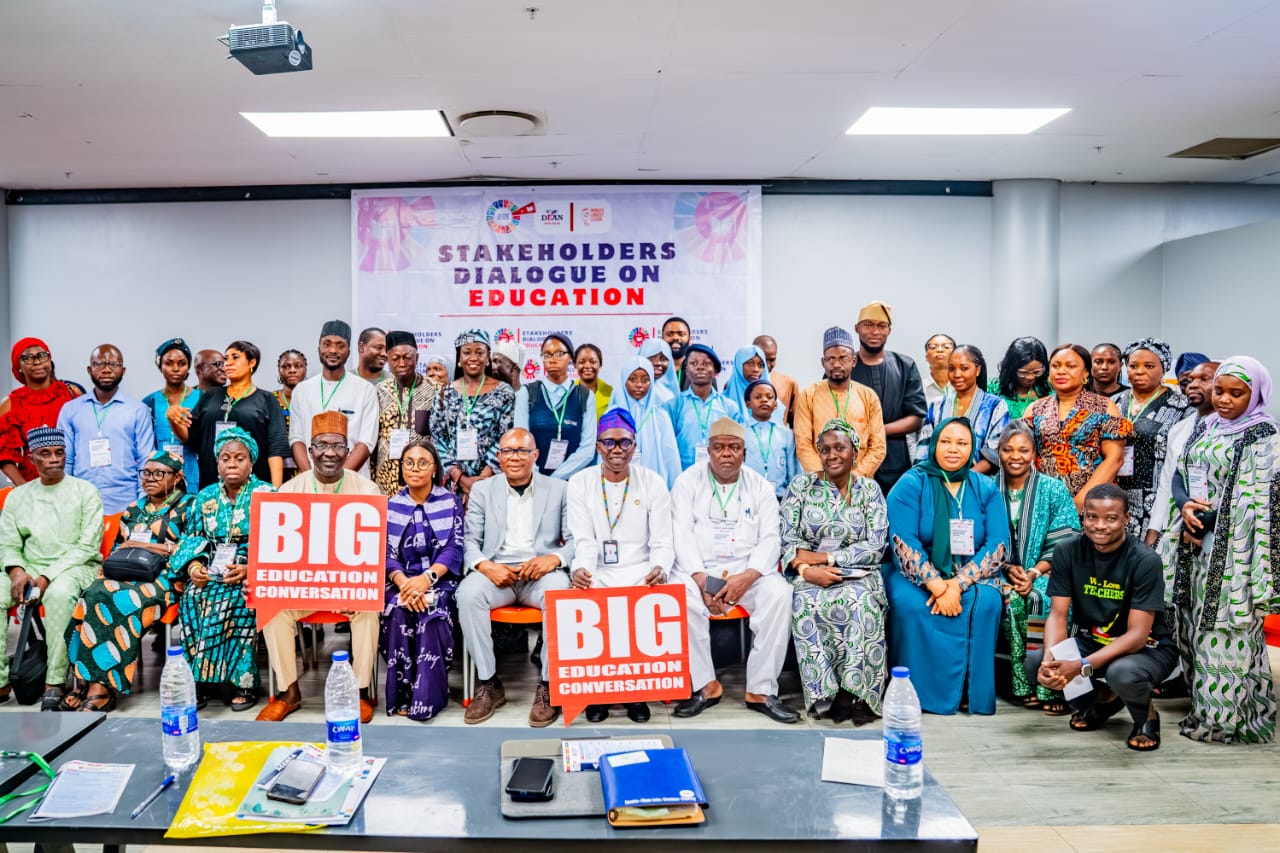
Group photo: DG’Rep, Dr Aristotle Onumo, Director of Stakeholders Management and Partnerships with the participants.
The Director-General of the National Information Technology Development Agency (NITDA), Kashifu Inuwa, has emphasised the critical role teachers play in driving Nigeria’s digital transformation, noting that classrooms will be central to shaping the country’s technology-driven future.
Inuwa made the remark during a stakeholders’ dialogue organised by the Development of Educational Action Network Initiative (DEAN) in Abuja.
The NITDA DG, who was represented by the agency’s Director of Stakeholder Management and Partnerships, Dr. Aristotle Onumo, speaking on the theme “Nigeria’s Current Digital Landscape: Our Reality and Its Practical Connection to Education,” said the rapid expansion of the digital economy is reshaping the education sector and redefining the role of teachers in modern learning environments.
Digital technologies have created unprecedented access to information and opportunities for students, they also present challenges that require guidance and responsible. Tteachers must go beyond the traditional role of knowledge transmission to become mentors who help students navigate the digital world safely and responsibly, he explained.
“Teachers are no longer just instructors; they are now guides who help students identify credible information, avoid harmful online content, and develop responsible digital behavior,”. Educators must cultivate critical thinking among students while equipping them with the skills needed to thrive in an increasingly technology-driven society, Inuwa added.
He reaffirmed NITDA’s commitment to advancing digital literacy nationwide through initiatives such as the Digital Literacy for All programme and partnerships with educational institutions aimed at strengthening teachers’ digital capacity. Empowering teachers with digital skills is vital to preparing Nigerian students for the future workforce and ensuring the country remains competitive in the global digital economy, he said.
Nigeria is currently pursuing an ambitious digital literacy agenda, targeting 70 per cent digital literacy by 2027 as part of broader efforts to build a knowledge-driven economy powered by innovation and technology.
The Executive Director of DEAN Initiative, Semiye Michael, in his remarks, said the workshop was designed to re-engineer teachers’ capacity in line with the realities of the digital economy.
“We need to strengthen teachers’ competence and provide them with access to the necessary digital infrastructure,” Michael said, adding that the engagement would help shape policies that support technology-driven learning in Nigerian schools.
He described the workshop as an “awesome experience,” noting that ideas generated during the session would be consolidated into a policy guide for the ministry and other relevant agencies. Strengthening teachers’ digital capacity would be vital to enhancing Nigeria’s competitiveness in the global knowledge economy, Michael noted.
The event attracted key stakeholders from the Federal Ministry of Education, Nigerian Communications Satellite Limited (NIGCOMSAT), as well as private sector experts.
