



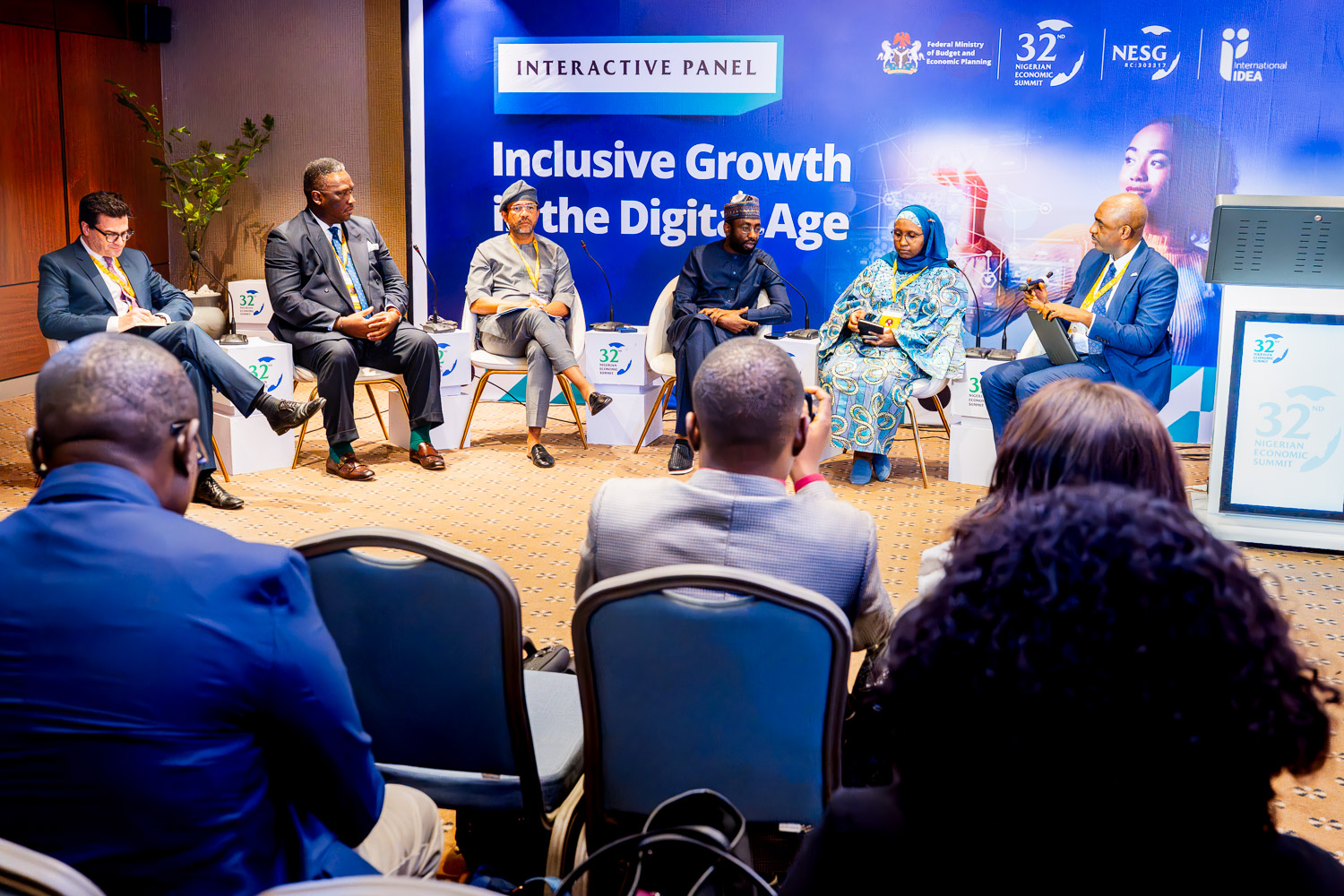
NITDA DG, Kashifu Inuwa, participates in a session titled “Inclusive Growth in the Digital Age” at the 32nd Nigerian Economic Summit (NES#32), organised by the Federal Ministry of Budget and Economic Planning in Abuja.
The National Information Technology Development Agency (NITDA) has called for stronger partnerships among industry players, academic institutions and innovation ecosystem stakeholders to close Nigeria’s digital skills gap, boost productivity and translate digital literacy into sustainable economic growth.
NITDA Director General, Kashifu Inuwa, made the call while speaking as a discussant at the MTN Breakfast Session, themed “
Inuwa stressed the need for a coordinated national strategy for digital skills development, urging stakeholders to move away from fragmented initiatives and adopt a unified approach that aligns education and training with industry demands.
He warned that the persistent disconnect between academic institutions, industry players and the innovation ecosystem continued to undermine efforts to develop a workforce capable of meeting Nigeria’s changing economic and technological needs.
According to him, while academic institutions play a critical role in developing human capital, their training programmes and graduate output must reflect the practical needs of industry to ensure that graduates possess relevant, applicable and market-ready skills.
“Our human capital is our greatest national resource,” he said, underscoring the importance of aligning education and skills development with industry requirements.
The NITDA Boss clarified that the agency’s digital literacy mandate was not to turn every Nigerian into an IT professional, but to equip citizens with the digital competencies required to improve their work, raise productivity and expand economic opportunities.
To advance this objective, NITDA developed the National Digital Literacy Framework, which targets 95 percent digital literacy by 2030, with an interim target of 70 percent by 2027, as set by President Bola Ahmed Tinubu.
Inuwa said meeting the targets would require sustained collaboration across sectors, prompting the agency to introduce the Digital Literacy for All initiative to expand digital skills nationwide through a multi-pronged approach.
A major component of the initiative is the integration of digital literacy into formal education. He disclosed that NITDA had partnered with Nasarawa State University and Cisco to develop learning content based on the National Digital Literacy Framework.
The framework covers six competency areas and three proficiency levels: basic, intermediate and advanced. In response to emerging technological demands, the agency is also reviewing the framework to incorporate artificial intelligence literacy.
As part of efforts to embed digital competencies in the education system, Nasarawa State University has integrated digital literacy into its general studies curriculum, making the subject compulsory for students.
Beyond training and curriculum development, NITDA is strengthening coordination and accountability through its National Digital Literacy Dashboard, a platform designed to track interventions and provide visibility into the contributions of organisations working to improve digital skills across the country.
Inuwa disclosed that 252 organisations had reported their activities on the dashboard, documenting the training of approximately 2.77 million Nigerians from 2023 to date.
The reported interventions covered all 774 local government areas and 14,664 communities, demonstrating the nationwide reach of the programmes captured on the platform.
He identified Cisco as the leading contributor to the reported figures, noting that its educational platforms had been used to train more than 1.073 million Nigerians.
The NITDA director-general urged organisations implementing digital literacy programmes, including those operating through foundations and corporate social responsibility initiatives, to report their activities on the dashboard.
He said comprehensive reporting would improve coordination, minimise duplication of efforts and help ensure that underserved communities benefit from digital skills interventions.
Inuwa emphasised that collaboration must go beyond delivering training programmes to ensuring that acquired skills translate into measurable productivity gains and broader national prosperity.
He urged industry stakeholders, educational institutions, innovators and other partners to work together to identify the skills employers need and align training programmes with those requirements.
He maintained that a coordinated digital skills ecosystem, backed by common standards, reliable data and shared national objectives, would be essential to building a digitally capable population and maximising technology’s contribution to Nigeria’s economic development.
