



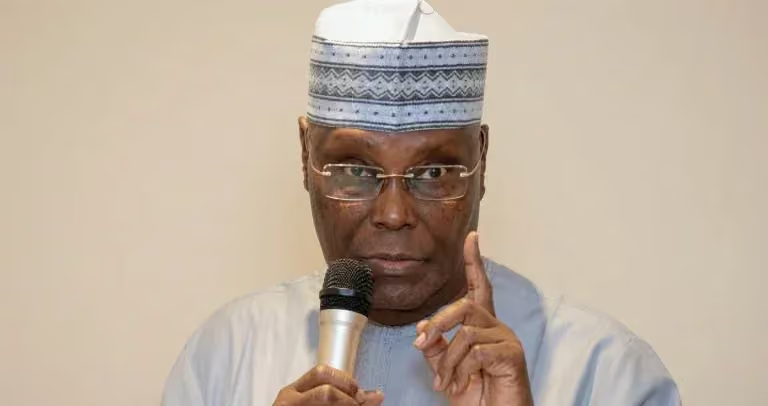
The controversy over petrol subsidy removal has intensified ahead of the 2027 elections, with the All Progressives Congress attacking former Vice-President Atiku Abubakar’s plan to restore the subsidy, while the African Democratic Congress challenged the Federal Government to account for the N15.8tn in additional revenues it said accrued from the reforms.
The National Chairman of the APC, Prof Nentawe Yilwatda, warned that Atiku’s proposal to return Nigeria to the old fuel subsidy regime could reverse the economic gains recorded under the ongoing reforms, with negative consequences for workers’ wages, education, infrastructure and the fiscal stability of states.
The APC national chairman, in a statement issued by his Special Adviser on Media and Information Strategy, Abimbola Tooki, on Sunday, said the former Vice President’s proposal to reinstate fuel subsidy would return Nigerians to fuel queues, threaten the payment of the current minimum wage and lead to the cancellation of education grants for Nigerian students, among other negative consequences for the masses.
On May 29, 2023, President Bola Tinubu, during his inauguration, declared that fuel subsidy was gone, in line with his campaign promise.
Although the removal triggered an increase in the prices of goods and services, the APC-led Federal Government has consistently maintained that the policy has yielded significant economic gains for the country.
Ahead of the 2027 election, the African Democratic Congress presidential candidate, who also promised in 2023 to end fuel subsidy if elected, last week pledged to reinstate the subsidy if elected in the January presidential election to cushion the effect of its removal on Nigerians.
His promise has, however, generated mixed reactions among Nigerians.
Reacting, Yilwatda, while receiving a delegation of economic stakeholders in Abuja, warned that the subsidy debate should go beyond political rhetoric and consider the fiscal burden and wider consequences for states, workers, education and infrastructure.
He stated, “The former Vice President Atiku Abubakar’s proposal to restore fuel subsidy raises fundamental questions about how such a policy would be financed and sustained without returning Nigeria to the cycle of fiscal pressures that characterised the previous arrangement.
“Subsidy may appear attractive because it promises cheaper petrol, but Nigerians must also ask the bigger question: who pays for the subsidy and what happens to the resources that government must divert to finance it?
“A policy cannot be judged only by its immediate benefit at the pump. We must examine its impact on government revenues, salaries, pensions, education, healthcare, infrastructure and the overall capacity of government to meet its obligations to citizens.”
Yilwatda said many states previously struggled to pay workers’ salaries and pensions, with some resorting to partial payments.
He said increased federal allocations following subsidy removal had improved states’ finances, urging caution against reintroducing subsidy and returning to past fiscal pressures.
The statement read, “The APC chairman also drew attention to the education sector, recalling the prolonged disruption of academic activities in Nigerian universities under the previous administration. Punch
