



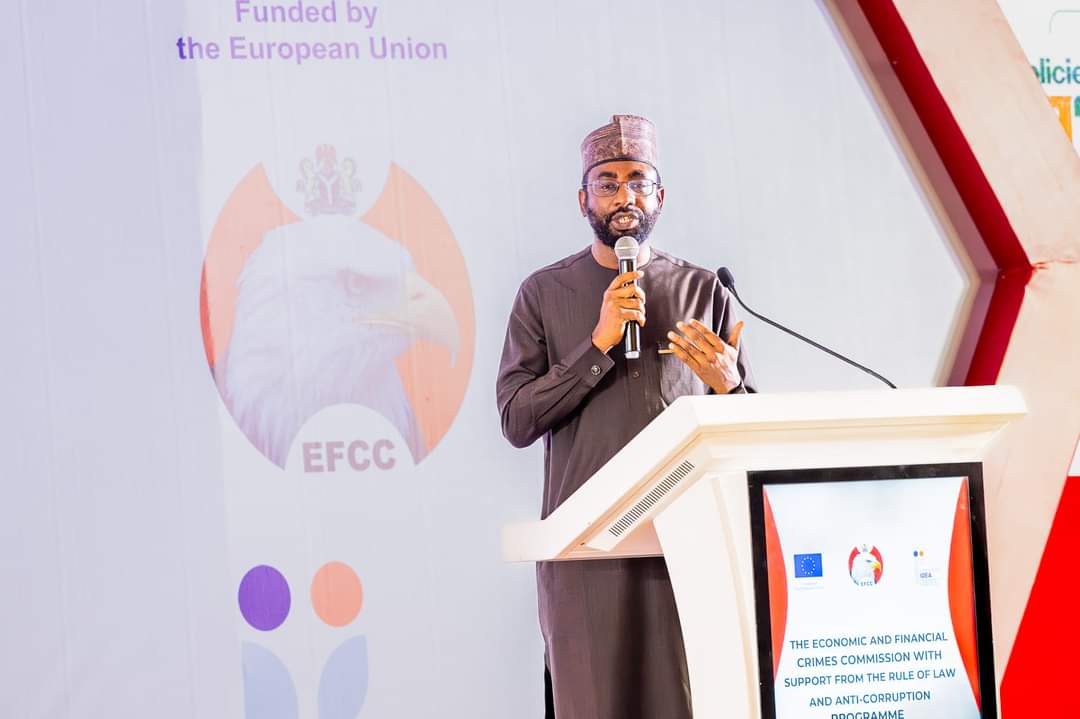
The Director General of the National Information Technology Development Agency (NITDA), Kashifu Inuwa CCIE has urged the public and private sectors to invest more in the training of cybersecurity professionals, citing that the benefits of securing organisations and processes, far outweighs the cyber-attacks. Part of efforts towards the transformative journey of strengthening National Security with total commitment to robust cybersecurity measures and digital trust, the event took place on Tuesday, October 22, 2024.
Inuwa, as a Guest Speaker, made this known while presenting a paper titled “Alternative to Cybercrime” at the National Cybercrimes Summit 2024, organized by the Economic and Financial Crimes Commission at the Banquet Hall of the Presidential Villa.
The summit was titled; Alternate to Cybercrime: Optimizing Cyber Skills for National Development,” a platform that brought together captains of industries, heads of security agencies, traditional and religious leaders to share ideas, expertise and experiences with a focus on enhancing digital skills as strategy to combat cybercrime.
Inuwa, expressed the importance of addressing the growing menace of cybercrime in Nigeria, while proposing alternative paths for Nigeria’s youth and strategies to fortify national cyber resilience.
He explained the complexities of cybercrime, noting that it is no longer restricted to laptops and desktops but extends to mobile devices, smart TVs, cars, and more, as everything becomes interconnected through technology.
Inuwa, defined the five major categories of cybercrime, which he explained as follow: Scam and Cashing Out or Money Laundering and stated that the financial sector remains the most vulnerable in Africa, technical products or services attacks, attacks and extortion, data or identity theft, with over 3,300 cyber-attacks reported weekly.
He said, “We are confronted with an urgent reality, Nigeria, a nation with a rich culture, talent and limitless potential is unfortunately grappling with the global menace of cybercrime but today, we are going to look at alternatives to cybercrime”. Cybercrime is a global issue that affects every facet of the digital economy, especially in Nigeria.
Inuwa, listed the factors that trigger cybercrimes like, financial incentives, lack of awareness, legal and moral implications, unemployment, more holistic approach to combating cybercrime, not only through law enforcement but also by offering viable alternatives to those tempted by illegal online activities.
“We need to look at alternatives to cybercrime and the government must focus on digital literacy, skills development, and job creation to steer young Nigerians away from cybercriminality,” he said.
Inuwa, stated the importances of providing positive alternatives for Nigerian youth and stressed the potential of the digital economy to create millions of jobs and contribute significantly to Nigeria’s GDP.
The first lady of the Federal Republic of Nigeria, Senator Oluremi Tinubu, was present at the unveiling and launching the EFCC Rapid Response Centre, a response desk against cybercrime that can be accessed at any time of the day.
Other dignitaries that graced the occasion were the Chairman of the Nigeria Governor’s Forum and Kwara State Governor, AbdulRahman AbdulRazaq, Katsina State Governor, Dikko Umar Radda, Zamfara State Governor, Dauda Lawal, Sultan of Sokoto, Alhaji Muhammadu Sa’ad Abubakar, Obi of Onitsha, Igwe Alfred Nnaemeka Achebe, Ooni of Ile Ife, who was represented by the Alara of Ilara, Oba Olufolarin Olukayode Ogunsanwo, President, Christian Association of Nigeria, Dr Daniel Okoh and others.
