



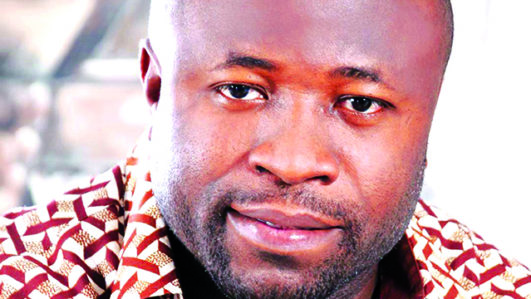
Okpechi
Immensely gifted and hard-working music video director, Uzodinma Okpechi, started directing musical video clips since 1999. But his breakthrough came in 2003, when he directed Sammie Okposo’s debut gospel album. And today, aside being a household name, 32 years old Okpechi, who started first as a movie producer/director, is also one of the most sought after music directors by top Nigerian musicians.
In this interview, the Abia State-born and multiple award winning music director, told us that Sunny Neji’s very popular song, Oruka, which he directed, has brought him more jobs and fame. He also spoke on why he left Nollywood for the music industry, secrets of being a good and successful director, among other sundry issues.
Enjoy the interaction!
Your sojourn into music videos directing, how and when did it begin?
I started as a music video director in 1999. But I came in first as a movie producer in 98. But I won’t stop giving credit to the man who believed in me when I started directing musicals as a greenhorn. Dozie Eriobu of infinity Merchants. He gave me the music video project of a foreign artiste to direct. His name is DOLMONDO, from DR Congo. It was a big achievement for me. I directed ten tracks of his whole album. I thought that would open the floodgate for me. But to my dismay, two, three years after, no other work came my way. Because of this, I went back to my movie-making job. Until in 2003, when Sammie Okposo called me to direct a track in his debut album “I wonder Why”, which turned out to be a hit. Then, the jobs started coming. And from then till this moment, I have conveniently directed over fifty-quality music videos. Sincerely speaking, I’ve not done my most challenging job yet.
So, in essence you have abandoned movie making for solely music video directing?
Not really! But the truth is that right now, I do 80% of music video directing which I combine with the shooting of commercials for corporate organizations. Besides any movie I’m going to direct now must worth its while. I want to correct some anomalies if I’m to go back to movies, just like I have done in the music sector. I’ve not seen the right setting that is why I’m taking my time before going back to Nollywood. I shot a movie last year, but not out yet. When it comes out, you will see some remarkable differences. It’s called Turntable. Things can be done better in Nollywood. I’m really out to correct and silence all those who usually feel nothing good can come out of Nigeria, especially our entertainment sector.
What makes one a successful music video director?
Being focused and giving your best to the job, you also need to be dynamic, creative and imaginative. But one thing that baffles me is that people still find it very difficult to pay me six figures for directing, which I believe I’m entitled to. My director fee runs into hundreds of thousands. I’m just a comfortable director. I’m also happy and feel good that corporate organizations like MTN and Globacom are beginning to believe that Nigerians can do things. They are looking inwards, instead of going to South Africa to look for obscure directors.
Do you have role models in the field of music video directing?
I give a lot of respect to Paul Hunter, an America music video director who has been there for long. For the new generation guys, Little X and few others are damn good music video directors. I’m sorry; I don’t look up to anybody as a role model in Nigeria. But some up and coming directors are trying.
As a child growing up, was this what you planned of doing?
No! Then I wanted to be a medical doctor that was my mindset. I’m tired of re-telling the story. But I came into showbiz through my companion, friend and brother, Simi Opeoluwa, the C.E.O. of House of Macro.
Aside being a music/movie director, are you into other ventures?
I enjoy being a music video director; I will enjoy being a music video director until Nollywood changes for the better. I’m pioneering a change and also a role model to lots of rising directors. So, I’m not in a hurry to leave directing music videos for other things. The money is becoming better, things are changing, music, movie and commercials directing are basically the ventures I’m into.
A lot of people are of the view that our music videos are poor and substandard. What is your view on this criticism?
It depends on the angle they are looking at it from. But I know that in three years, I have been able to change the face of Nigerian music videos. Nigerian directors now believe more in themselves. They know they can do better than what they have been doing in the past. They know they can charge more now. They also know they can put food on the table by directing music videos. We are making professionals out of this job unlike before. Our works are not poor or substandard. We are really improving. It is only the quacks, just like we have in every profession that are giving us bad name.
We would like to know more about the man behind the name, Uzodinma Okp
Okpechi
Immensely gifted and hard-working music video director, Uzodinma Okpechi, started directing musical video clips since 1999. But his breakthrough came in 2003, when he directed Sammie Okposo’s debut gospel album. And today, aside being a household name, 32 years old Okpechi, who started first as a movie producer/director, is also one of the most sought after music directors by top Nigerian musicians.
In this interview, the Abia State-born and multiple award winning music director, told us that Sunny Neji’s very popular song, Oruka, which he directed, has brought him more jobs and fame. He also spoke on why he left Nollywood for the music industry, secrets of being a good and successful director, among other sundry issues.
Enjoy the interaction!
Your sojourn into music videos directing, how and when did it begin?
I started as a music video director in 1999. But I came in first as a movie producer in 98. But I won’t stop giving credit to the man who believed in me when I started directing musicals as a greenhorn. Dozie Eriobu of infinity Merchants. He gave me the music video project of a foreign artiste to direct. His name is DOLMONDO, from DR Congo. It was a big achievement for me. I directed ten tracks of his whole album. I thought that would open the floodgate for me. But to my dismay, two, three years after, no other work came my way. Because of this, I went back to my movie-making job. Until in 2003, when Sammie Okposo called me to direct a track in his debut album “I wonder Why”, which turned out to be a hit. Then, the jobs started coming. And from then till this moment, I have conveniently directed over fifty-quality music videos. Sincerely speaking, I’ve not done my most challenging job yet.
So, in essence you have abandoned movie making for solely music video directing?
Not really! But the truth is that right now, I do 80% of music video directing which I combine with the shooting of commercials for corporate organizations. Besides any movie I’m going to direct now must worth its while. I want to correct some anomalies if I’m to go back to movies, just like I have done in the music sector. I’ve not seen the right setting that is why I’m taking my time before going back to Nollywood. I shot a movie last year, but not out yet. When it comes out, you will see some remarkable differences. It’s called Turntable. Things can be done better in Nollywood. I’m really out to correct and silence all those who usually feel nothing good can come out of Nigeria, especially our entertainment sector.
What makes one a successful music video director?
Being focused and giving your best to the job, you also need to be dynamic, creative and imaginative. But one thing that baffles me is that people still find it very difficult to pay me six figures for directing, which I believe I’m entitled to. My director fee runs into hundreds of thousands. I’m just a comfortable director. I’m also happy and feel good that corporate organizations like MTN and Globacom are beginning to believe that Nigerians can do things. They are looking inwards, instead of going to South Africa to look for obscure directors.
Do you have role models in the field of music video directing?
I give a lot of respect to Paul Hunter, an America music video director who has been there for long. For the new generation guys, Little X and few others are damn good music video directors. I’m sorry; I don’t look up to anybody as a role model in Nigeria. But some up and coming directors are trying.
As a child growing up, was this what you planned of doing?
No! Then I wanted to be a medical doctor that was my mindset. I’m tired of re-telling the story. But I came into showbiz through my companion, friend and brother, Simi Opeoluwa, the C.E.O. of House of Macro.
Aside being a music/movie director, are you into other ventures?
I enjoy being a music video director; I will enjoy being a music video director until Nollywood changes for the better. I’m pioneering a change and also a role model to lots of rising directors. So, I’m not in a hurry to leave directing music videos for other things. The money is becoming better, things are changing, music, movie and commercials directing are basically the ventures I’m into.
A lot of people are of the view that our music videos are poor and substandard. What is your view on this criticism?
It depends on the angle they are looking at it from. But I know that in three years, I have been able to change the face of Nigerian music videos. Nigerian directors now believe more in themselves. They know they can do better than what they have been doing in the past. They know they can charge more now. They also know they can put food on the table by directing music videos. We are making professionals out of this job unlike before. Our works are not poor or substandard. We are really improving. It is only the quacks, just like we have in every profession that are giving us bad name.
We would like to know more about the man behind the name, Uzodinma Okpechi?
Well, I’m a young man of 32 years trying to carve a niche for myself in the showbiz industry with a bias for music video directing. I’m from Umuahia South LGA of Abia State. I grew up here in Lagos and lost my dad when I was seven years old. I’m the second and last of two sons. My mum is alive and kicking.
As a top music video director, what is your biggest achievement so far?
It was clinching the MTN Life is Beautiful job. The money was good and life is going to get more beautiful (general laughter).
If given the opportunity, which foreign musician would you like to direct his work?
Kelly. Because I love his music and what he believes in, he has been there since his inception. I don’t want to be an Uzo Okpechi today and tomorrow my name fades. I want to be an all-time relevant person. Would also like to direct Michael Jackson, he has been there for decades.
What is your dream for the Nigerian music industry and showbiz in general?
I want and pray that our music industry will blow out of proportion, as in anybody having anything with our industry will be an instant millionaire. That is my dream for our music industry. Then in general, I want our practitioners to earn more, from top to the bottom. We should live better than we are living now. And this can only come about with a change. It is the attitude. Are you into this for the love and passion you have for it, or you are in to make money? Or is it a trading, buying and selling business that some people have turned it into? The American entertainment industry has lasted for over 200 years and they are still making waves. It is still flourishing.
Most times, when you watch our films or musical, no content, everything is wrong and nose-diving. I’m also scared that the few good ones might be corrupted in the nearest future by the bad ones. They are few, very few. Something needs to be done. But the biggest problem facing our music industry from my own perspective is piracy. For us to fight this scourge, a collective effort is needed. After 9/11 bombing, President Bush said something: “The only way to battle is to retaliate with equal measures. And it might involve taking of lives”. I see pirates as terrorists, who also need to be terrorized back with equal measures. Remove piracy and the real practitioners will enjoy the fruit of their labour.
What are the music projects that you are currently handling and working on as a top music director?
A lot! There is one called Project Nigerian; it is the brainchild of Chris Mba, a renowned musician who has been there since I was a kid. He did a proudly Nigerian song with Segun Arinze, KSA, and some other notable Nigerian artistes. I handled the directing, which was supported by the World Bank studio. The songs in the project are to unite Nigerians. They are songs of hope for Nigerians. Another big project that I just finished was the MTN Music video sang by Joy Odiate. It is titled Life is Beautiful. Cobham Asuquo produced, while I directed. It will soon be out. Then, the wave-making GloShow on network, which I produce and direct every week with Emma Ugolee as presenter, is another huge project I’m proud of handling. I’ve also been busy directing music videos for top Nigerian musicians and some foreign ones. It’s been a busy year and we thank God for that.
Has any of your works as a music video director fetch you an award?
I’ve won lots of awards. Even at this year’s Channel O Awards, Tuface Idibia’s, African Queen, which I directed, won the best musical video. Even when MTV Base Africa started, this same African Queen, that I directed, was the first indigenous Nigerian music that the station played. Sunny Neji’s Oruka, has brought me more jobs and fame. It even brought me bigger jobs from corporate bodies.
At the recently held AMEN Awards, I won the Best Musical Video director award. For me, that was history being made. I’ve also won some outstanding awards outside Nigeria… I also won an award with Sunny Neji’s Oruka, which I directed, early this year. Organizers of awards should create a special and distinct award for music video directors, instead of allowing us to share most of our awards with the artistes for whom the work was directed. Nigerian Film Festival, also gave me an award as best director, best music video and best choreography in a music video. In fact, it was three awards in one. AMEN Awards also gave me the most exciting music video award few years ago and many more.
Sunny Neji’s Oruka, which you directed, is regarded as one of the best music videos in recent times. What was the magic?
It was a combined effort among the artistes, O’Jez and myself. O’Jez provided the money and every other thing that we needed. Sunny Neji came with lots of inspiration. He is somebody that inspires you to work and give your best. I drew the inspiration from him and we discussed the concept. And to the point of realization, we got all we dreamt of. He brought in Jimi Delaja, the costumier, all the way from Ghana. Then O’Jez music was superb in providing all that was needed for a quality video. Even the locations, I also played my part as the director and at the end, it became a hit. I thank God that people liked how that video came out. Budget goes a long way in determining how good a music video is executed.
We would like to know some of the popular jobs you have directed as a music video director?
You already know Tuface’s African Queen, Sunny Neji’s Oruka, Slam’s Ibu Chineke, Sammy Okposo’s I Wonder Why, Addicted, Mighty God, and many of his works. Tony Tetuila’s E Go Better, Eddy Remedies’ latest work. A lot I can’t just start counting them.
At 32, with all the money and fame, why are you still single?
I have made fame and not money. I’m not single but yet to be married. I’m not searching; I have a fiancée based in London. Very soon, we will walk down the aisle.
First published, July 2005.
