



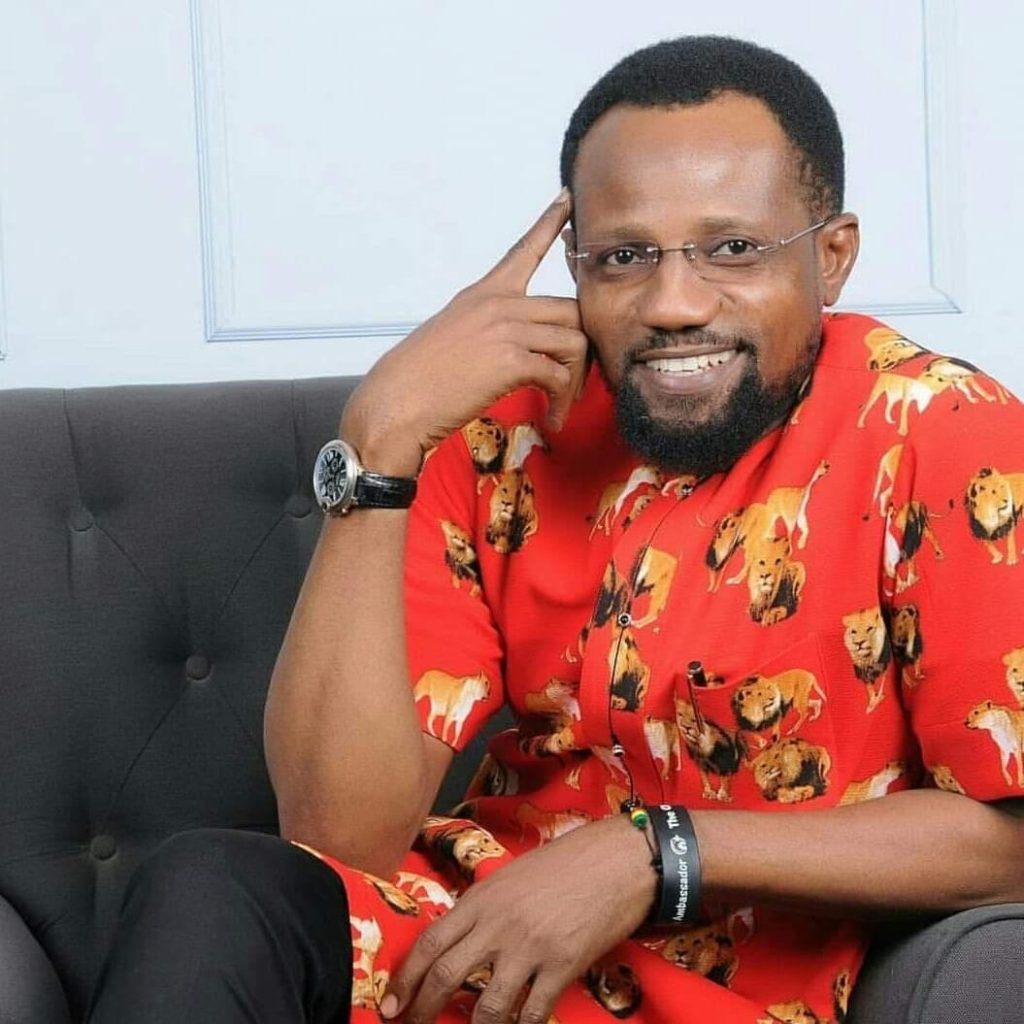
Dickson Iroegbu
For diminutive Dickson Iroegbu, the best movie director awardee at the maiden edition of African Movie Academy Awards (AMAA), the sojourn to stardom in Nollywood did not come on a platter of gold, neither was it achieved through half measures and cutting corners. His came through hard work, perseverance, resilience, doggedness, and a never-giving-up spirit even in the face of insurmountable difficulties. He started in ’97, as a production assistant, assisting producers and directors to carry generating sets and other props from one location to another, and also running errands on the other hand for movie stars on set, amid tips here and there from the few generous ones.
He later delved into script writing and churned out some successful scripts that turned blockbusters. However, the turning point in his career came in 2001 when despite much opposition, he went ahead to direct Days of Glory, his first attempt behind the cameras, and that opened the floodgate of more works, accolades, and awards for the father of two.
Iroegbu’s name was finally carved in gold and registered on world map when he defeated his “senior” colleagues and mentors at the elitist Directors Guild of Nigeria (DGN) in Bayelsa to clinch the keenly contested prize for the Best Director at the maiden edition of AMAA Awards. In this interview, he spoke on several germane issues, especially those affecting Nollywood.
Enjoy the interaction!
How did you feel winning the best director award at the maiden edition of AMAA, in 2005?
Most importantly now, the whole world and the whole of Africa should know that Dickson Iroegbu has come to stay in Nollywood. If I did it last year and did it again this year even though not as best director, at least, my movie carted away three awards this year, in the best actress, best supporting actress and best sound, it’s not easy.
First of all, the secret of it all is from the most High and then perseverance led me to where I got to and then after I got to where I got to as a director I started being conscious of the fact that people who are intelligent are watching and I’m not taking my viewers for a ride. At least, I’m happy that first I am a pioneer member on anything that has to do with AMAA. Any day you talk of AMAA you make reference to Dickson Iroegbu and I sat on that sit as the maiden edition’s best director that means AMAA is part of me from inception. All things being equal there were areas that I questioned at the last award, but in summary even biblically, your righteousness can supersede your evil, since they were able to go beyond their weaknesses I give them eighty over hundred.
What does the award mean to you, has it also changed you in any way?
I now have a burden and a cross to carry. I now know that a lot of people are watching me and it is now more challenging for me to become a director after AMAA. But truly I deserve the award; AMAA has exposed me a lot, and also made my face popular unlike before that people knew only about the name without the face.
The award also made me meet a lot of people that I never dreamt of meeting. Because of AMAA, I was called to shoot a movie on James Ibori. But despite all these, the award is a burden; a cross that I’m carrying and I hope that God strengthens me. Truth is that I can’t afford to disappoint the people who gave me this award. Truth is that Oscar is on the way for me. I also see myself picking another AMAA because I don’t know who will challenge me. My Oscar is very soon, just by the corner, it’s been beckoning.
How did your journey in Nollywood begin?
I came into Nollywood as a production assistant between ’97/98 and was also writing scripts. My first script was titled “Just A Mission”. But I started as a production assistant on the set of Narrow Escape 1. But I was already a graduate while doing all these. I finished from ABU, Zaria, read Business Administration. The irony of this whole thing was that I had a talent I wanted to pursue and there was no encouragement from anybody, especially my family. I followed my dream with a passion despite the many ups and downs. I knew where I was heading and what you are seeing now is just the beginning.
Did you envisage your meteoric rise, this early?
Like I told you I started as a production assistant, carrying generator sets and other props on locations, from there I started writing scripts and later did continuity and was at a time, a costume assistant, props and props assistant. I was also a soundman. Deep down, I knew I was learning and going through a process. I also knew these were dues one has to pay in life. It was a price.
What was the turning point for you in Nollywood?
I cried at AMAA awards when the flashback came. My first movie as a production assistant was on the set of a movie directed by Andy Amenechi and incidentally the two of us were nominated for the same best director category at AMAA, which I eventually won. The turning point in my career came with my first movie as a director “Days of Glory”, I financed it myself in 2001. Again, when I was ripe to direct nobody believed in me or even invested in me. Funny enough, my first movie didn’t do well in the market, but that didn’t discourage me. After seeing and agreeing to market my first movie, Amaco gave me Romantic Attraction to direct, which I also wrote the script. Ironically, same Amaco bought the first script I wrote in Nollywood and also marketed the first movie directed by me. He was also the first marketer to give me money to shoot a movie. God used him to bring to light my hidden talent.
Sincerely speaking, I can’t count the number of movies I have directed so far, because I’m not a businessman director. All my movies are dear to my heart, but the one that has really challenged and stressed me so much in recent times is Women’s Cot, but before it was Mayors, which gave me the AMAA award, it was also challenging, the first car I bought was crushed while shooting Mayors. I shot the movie with a swollen leg, so that was my first challenging movie as a director.
As a leading director in Nollywood, what would you say are the major challenges on the job?
First, was that nobody really believed I could direct a movie, a lot were like, lets watch him mess himself up, the consciousness of the fact that those around me didn’t believe me, was a major challenge and that was demoralizing. There was no encouragement, but I refused to give up. And some directors were like how can Dickson be directing, in fact, DGN frustrated me and battled me. Despite all these, I just believed that my works would convince them. I later didn’t believe it was happening to me that day when DGN president, Fidelis Duker, was handing over the Best Director award to me at AMAA. Truth is that I’ve not gotten anywhere yet, but I’ve always known that I will be recognized and appreciated in a big way someday. I always knew that I have something to offer to planet earth, which has to do with my talent, it started with poetry, I got an award in 2000 from Washington and it was well celebrated in the industry.
You are a young man of many parts. What motivates you?
Humility and simplicity, they inspire me a lot. Another is the consciousness of being called and finally my immediate family, especially my kids they have brought so many blessings into my life, and they have really inspired me. They make me work harder.
Who are your role models within and outside Nollywood?
I admire James Cameroun a great deal just like me, he is a writer and when he was to direct a movie then nobody believed in him. Here in Nollywood, I can’t forget Andy Amenechi, Teco Benson and Lancelot Imasuen, whom I always tell is the James Cameroon I see in Nollywood. Teco, Moses and Reginald Ebere, encouraged and gave me their blessings and support. I also don’t pretend not to recognize and acknowledge some directors before me, even till date I still respect and answer them Sir. I’m just beginning.
We would like to know more about you and your background?
Well, I’m Dickson Nnamdi Iroegbu, from Mbaise, Imo State, I’m an adult born on Dec. 8, forget the year, principled to a fault and also very determined and simple. Happily married with two kids. My wife works with the Censors Board, met her there and censored her out of the Censors board to my house. I’m from a polygamous home, from my mum’s side, we are four boys, four girls, and I’m second to last child.
In your own views, what do you see as the biggest problem facing Nollywood?
Our major problem is unity, because a house divided against itself cannot stand, we should stop fighting ourselves. And the only way we can excel is by coming together to understand ourselves better. We should also inform the world that talents are abound here, we should put money behind, as practitioners, we should stop being businessmen directors and act like creative minds. We should understand our positions and enhance the class and quality of our movies and believe in those with the talent and stop patronizing the businessmen directors. There are professionals who are conscious of the name and are ready to sacrifice in order to ensure that quality is given out of Nollywood.
How rich are you as director, in fact, are you a millionaire director?
Yes, I am, I must accept it.
What new projects are you currently working on?
After winning AMAA best director award at the maiden edition, we now realized that people are watching and we are now careful on what to shoot and what not to shoot. After the awards, I shot a flick that has never been shot in the history of Nollywood, titled Women’s Cot, which also got three awards at the last AMAA. The movie had a large cast of 80 women, directing women on set is not usually an easy task. I had super stars like Joke Silva, Bukky Ajayi, Onyeka Onwenu, Gloria Anozie Young, and many others on set. In fact, people are still wondering till date how I was able to cope with all of them. But basically the movie talked about women liberation in another way, but we picked it from the negative angle.
The whole thing was my concept but written by Tai Emeka Obasi. I spent three months shooting this movie and before going on to set, I went to my pastor and told him I was going to hell to shoot a movie that he should pray for me. It was not easy handling Onyeka Onwenu on set, we clashed severally. But give it to her, she is a mega star among stars. Working with her was an honour despite the clashes. The film gulped over ten million naira, but my producer cum executive producer John Nwatu refused to budge. He believed in the project. He paid me very well, but the money was not the issue. And it will remain my biggest movie in a long while to come.
There seems to be so many crisis surrounding the Ibori movie, we would like to hear your own side of the whole story?
I read on the papers that I was given N37million to shoot a movie; that’s balderdash. If I have that kind of money, I will go straight to Hollywood and shoot their kind of movies. With N37million, I will embark on a project that would bring down Hollywood to Nollywood. Having pronounced it, I’m sure the money is coming to me soon since some people said I was given that kind of money. Besides, I didn’t work with Gov. Ibori, I only worked on story line that had to do with Gov. Ibori. I was called to produce and direct the movie, but on getting to Warri, the guy started singing another tune. We started the project but had to stop when money was no longer coming, I only collected N1.3million and the movie was to be titled “Big Heart Treasure”. While all these were going on, I was in constant touch with the SSG of the Delta State Government and some of the Commissioners and other top government officials.
First published, June 2006.
Culled from Azuh Amatus’ best selling books, FAMOUS FACES…
