



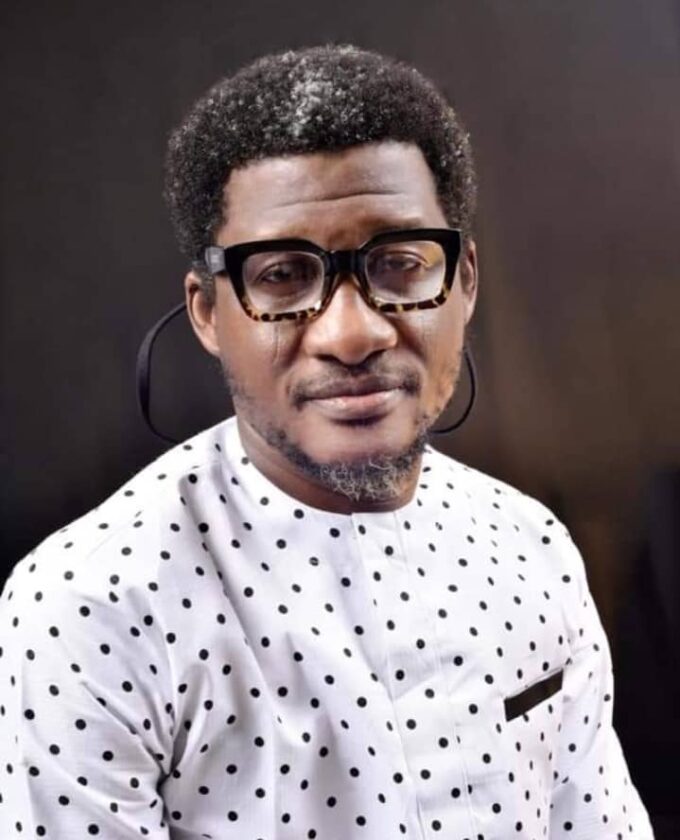
Pioneer filmmaker, Fidelis Attah Duker, is unarguably one of the biggest names in Nollywood today. In fact, Duker, whose first movie in Nollywood, Ese Atijo, was produced in 1993, is as old as the industry where he currently plays big and is hugely revered. With over 70 movies and TV programmes to his credit, the boss of FADFM Calabar, and first elected president of the Directors Guild of Nigeria (DGN), has no doubt traversed the length and breadth of the industry with huge imprints and impactful presence.
In this exclusive and explosive interview, Duker, also the founder of the Abuja International Film Festival and regional secretary of FEPACI, shared his very remarkable Nollywood odyssey with us. He also bared his mind on the challenges facing Nollywood, especially lack of government support and how it can be remedied.
Duker, who admitted that Nollywood has been good to him, further gave an insight into how the industry can be solidified and strengthened to benefit its many suffering and struggling practitioners.
Enjoy the interaction!
As one of the pioneers and a leading filmmaker in Nollywood, we would like to know more about you and what you are doing currently?
Interesting question, I came into the film and TV business about 30 years ago. I possess a first degree in Mass Communication and an MBA in International Business from Crawford University, among other degrees. I am a filmmaker, TV producer, and I run a broadcast media organization FAD FM, Calabar, and FAD 360TV, respectively. I am also the founder of the annual Abuja International Film Festival. So to your question, I am more involved in the running of my broadcast organization in Calabar and Abuja respectively. It is also important to mention that I am involved in consultancy for several organizations globally, based on my position as the regional secretary general of the Pan African Federation of Filmmakers.
Going down memory lane, we would also like to know when and how you joined Nollywood.
I actually joined what is now referred to as Nollywood from television as most of us cut our teeth from the Nigerian Television Authority. You are right to refer to me as a pioneer of Nollywood because as far back as 1992, I had attempted to make a film titled Devil’s Empire, but sadly it never saw the light of the day. But I was able to make my first feature film in 1993 with Ese Ajito, a film in Yoruba language starring Segun Arinze, Idowu Phillips (Iya Rainbow), and Jide Kosoko.
Then by 1994, I made Skeleton, an Igbo project, at that time Igbo films were the rave and it had the likes of Sam Loco, Sunny MCDon, Jerry Amilo, Emeka Enyiocha, Hanks Anuku, and your sister-in-law, Nkoli Azuh Arinze, actually played the lead in that film. It was also the first film distributed by Ojiofor Ezeanyaeche’s O.J. Productions. So in other words, I started from writing, acting and, at a point, was a production manager on some productions of NTA. I give some part of my career path success to my boss Danlandi Bako, whom I worked with on some productions like Morning Ride, Blossom, and Super Express Show.
As a top director, tell us more about your other movie projects and what inspired your sojourn to Nollywood.
After ESE ATIJO and SKELETON, I made NEMESIS, an English movie, but my biggest break came with NOT MY WILL which had nine nominations and two awards at the 1996 THEMA Awards and I have gone ahead to make over 70 films and TV programmes. However, I was inspired by my early interest in literature, as a student of Federal Government College Kano, we went for several drama competitions and then I was drawn to television programmes like Village Headmaster, Cock Crow At Dawn, Adio Family, Koko Close, Winds Against My Soul, Pot of Life amongst several other engaging TV programmes of that era. That was the inspiration to the silver screen.
Aside filmmaking, being a former DGN president, and running the Abuja International Film Festival, what else do you do in Nollywood?
I was DGN president between 2003 and 2007 as the first elected President of the Directors Guild of Nigeria. Immediately after I left office, I was elected the continental president of the African Festival Network and became a board member of Arteria Network another continental body for Artists on the content, all these happened between 2010 and 2015. Then in 2015, I was elected the Regional Secretary for West Africa of FEPACI the continental body for filmmakers established 52 years ago, I was reelected for a second term at the congress in Ouagadougou for another term in 2019. So you can see I have been representing the industry continentally.
What are the major challenges and pains of running AIFF, for almost two decades non-stop?
Lack of funding and institutional support has been the challenge but we have a commitment to keep the festival going. It is painful that we are still discussing institutional support 19 years down the line, this is a country that hardly appreciates creative works rather they are more concerned about mediocrity. We are committed to keeping the festival going.
Pioneer filmmaker, Fidelis Attah Duker, is unarguably one of the biggest names in Nollywood today. In fact, Duker, whose first movie in Nollywood, Ese Atijo, was produced in 1993, is as old as the industry where he currently plays big and is hugely revered. With over 70 movies and TV programmes to his credit, the boss of FADFM Calabar, and first elected president of the Directors Guild of Nigeria (DGN), has no doubt traversed the length and breadth of the industry with huge imprints and impactful presence.
In this exclusive and explosive interview, Duker, also the founder of the Abuja International Film Festival and regional secretary of FEPACI, shared his very remarkable Nollywood odyssey with us. He also bared his mind on the challenges facing Nollywood, especially lack of government support and how it can be remedied.
Duker, who admitted that Nollywood has been good to him, further gave an insight into how the industry can be solidified and strengthened to benefit its many suffering and struggling practitioners.
Enjoy the interaction!
As one of the pioneers and a leading filmmaker in Nollywood, we would like to know more about you and what you are doing currently?
Interesting question, I came into the film and TV business about 30 years ago. I possess a first degree in Mass Communication and an MBA in International Business from Crawford University, among other degrees. I am a filmmaker, TV producer, and I run a broadcast media organization FAD FM, Calabar, and FAD 360TV, respectively. I am also the founder of the annual Abuja International Film Festival. So to your question, I am more involved in the running of my broadcast organization in Calabar and Abuja respectively. It is also important to mention that I am involved in consultancy for several organizations globally, based on my position as the regional secretary general of the Pan African Federation of Filmmakers.
Going down memory lane, we would also like to know when and how you joined Nollywood.
I actually joined what is now referred to as Nollywood from television as most of us cut our teeth from the Nigerian Television Authority. You are right to refer to me as a pioneer of Nollywood because as far back as 1992, I had attempted to make a film titled Devil’s Empire, but sadly it never saw the light of the day. But I was able to make my first feature film in 1993 with Ese Ajito, a film in Yoruba language starring Segun Arinze, Idowu Phillips (Iya Rainbow), and Jide Kosoko.
Then by 1994, I made Skeleton, an Igbo project, at that time Igbo films were the rave and it had the likes of Sam Loco, Sunny MCDon, Jerry Amilo, Emeka Enyiocha, Hanks Anuku, and your sister-in-law, Nkoli Azuh Arinze, actually played the lead in that film. It was also the first film distributed by Ojiofor Ezeanyaeche’s O.J. Productions. So in other words, I started from writing, acting and, at a point, was a production manager on some productions of NTA. I give some part of my career path success to my boss Danlandi Bako, whom I worked with on some productions like Morning Ride, Blossom, and Super Express Show.
As a top director, tell us more about your other movie projects and what inspired your sojourn to Nollywood.
After ESE ATIJO and SKELETON, I made NEMESIS, an English movie, but my biggest break came with NOT MY WILL which had nine nominations and two awards at the 1996 THEMA Awards and I have gone ahead to make over 70 films and TV programmes. However, I was inspired by my early interest in literature, as a student of Federal Government College Kano, we went for several drama competitions and then I was drawn to television programmes like Village Headmaster, Cock Crow At Dawn, Adio Family, Koko Close, Winds Against My Soul, Pot of Life amongst several other engaging TV programmes of that era. That was the inspiration to the silver screen.
Aside filmmaking, being a former DGN president, and running the Abuja International Film Festival, what else do you do in Nollywood?
I was DGN president between 2003 and 2007 as the first elected President of the Directors Guild of Nigeria. Immediately after I left office, I was elected the continental president of the African Festival Network and became a board member of Arteria Network another continental body for Artists on the content, all these happened between 2010 and 2015. Then in 2015, I was elected the Regional Secretary for West Africa of FEPACI the continental body for filmmakers established 52 years ago, I was reelected for a second term at the congress in Ouagadougou for another term in 2019. So you can see I have been representing the industry continentally.
What are the major challenges and pains of running AIFF, for almost two decades non-stop?
Lack of funding and institutional support has been the challenge but we have a commitment to keep the festival going. It is painful that we are still discussing institutional support 19 years down the line, this is a country that hardly appreciates creative works rather they are more concerned about mediocrity. We are committed to keeping the festival going.
Several factors make a good film; it starts with an engaging and interesting story that has all the elements of entertainment, information and education. Then you must add the other ingredients like good screenplay, good directing, editing, all technical ingredients like camera, sound, light and most importantly, good cast for delivery and preferably bankable actors that can guarantee ROI.
Have you ever been harassed sexually by desperate actresses on set?
No I haven’t, I think it’s a function of what you give that you get. To me those who say they are harassed by female artiste must double check themselves. If you don’t give room it won’t happen.
Do you think the government has done enough to support Nollywood and its practitioners?
It depends on the government and at what level. I will explain because school of thoughts will argue that government is a continuum but I can say that the previous government consciously supported the industry through several interventions like BOI, NEXIM and Project ACT funds but regrettably till date the PMB government haven’t done anything to show they believe Nollywood contributes about 3.17% to our GDP. However, recently Lagos state government introduced a one billion intervention for Nollywood practitioners resident in Lagos, but we await the implementation.
As a leading practitioner, what would you say is your biggest achievement in Nollywood?
Nollywood has improved tremendously from its humble beginning almost 30 years ago with Living In Bondage to what we see today. The brand has become global with several international attention in deals and opportunities for practitioners. The Nollywood film has travelled round the world and creating a cultural colonization for the black race thereby giving the African filmmakers, not only Nigerian filmmakers a voice.
Also, as a top-notch filmmaker and former national president, what would you say is the biggest challenge facing DGN members and the possible way forward?
Ironically as I said earlier, I left office as president in June 2007 over 14 years ago and I can say successive administrations after my tenure have tried to raise the bar, I recall when I was president we had only Lagos, PH, Enugu and Abuja but today I am aware we now have more than seven chapters across the country. So challenges cannot stop rather every administration will try to solve whatever challenges are inherent during their administration.
In your opinion, are Nigerian entertainers well remunerated?
Today I can conveniently say Nigerian entertainers live solely on entertainment unlike 25 years ago when they had to do a side job. Remuneration can never be adequate considering man’s quest for more but on a serious note, remuneration has improved but I have an issue with the imbalance that happens with the remuneration of those at the bottom of the ladder. I think those who play minor, extras and behind the screen should be well paid or remunerated like the big stars.
Any regrets as a leading voice cum stakeholder in Nollywood?
Nollywood has been good to me over the years and if I measure my regrets with my benefits from Nollywood, I can safely say my regrets are limited and not worth mentioning
What are the three major things a good director must look out for in any given script on location?
The plot of the story, characterization, language or theme of the film’s script.
Can you direct a pornographic film?
No. Capital No … Never.
As a pioneer director, do you feel threatened by the emergence of new talents in Nollywood today?
They are no threats, besides it’s a generational thing, in every sector it comes a time, a new generation emerges on the scene. Moreover it’s a big industry that can accommodate everybody so there is no need for fear or threat as in my opinion everybody has its own space.
And what stands you out as a pioneer filmmaker in Nollywood?
Consistency, impactful years in the industry, ambitious and my creative nature to explore opportunities as I am not static.
And lastly, we would like to know more about your radio station, FADFM and why the choice of Calabar as its location?
FAD FM 93.1 is four years old and it is doing well. The choice of Calabar was a choice of a niche market when we applied for the license in 2007 and commenced operation 10 years after in 2017. We wanted a niche market and as at 2007, there was no private radio station in Calabar but unfortunately with government approval bureaucracy it took eight years and three successive governments before we got the approval in 2015 and started commercial broadcast in 2017. But all in all, we have done well in four years. However, we are working on further expansion as the years go by.
First published in DAYLIGHT, November 15, 2021.
Culled from Azuh Amatus’ best selling books, FAMOUS FACES…
