



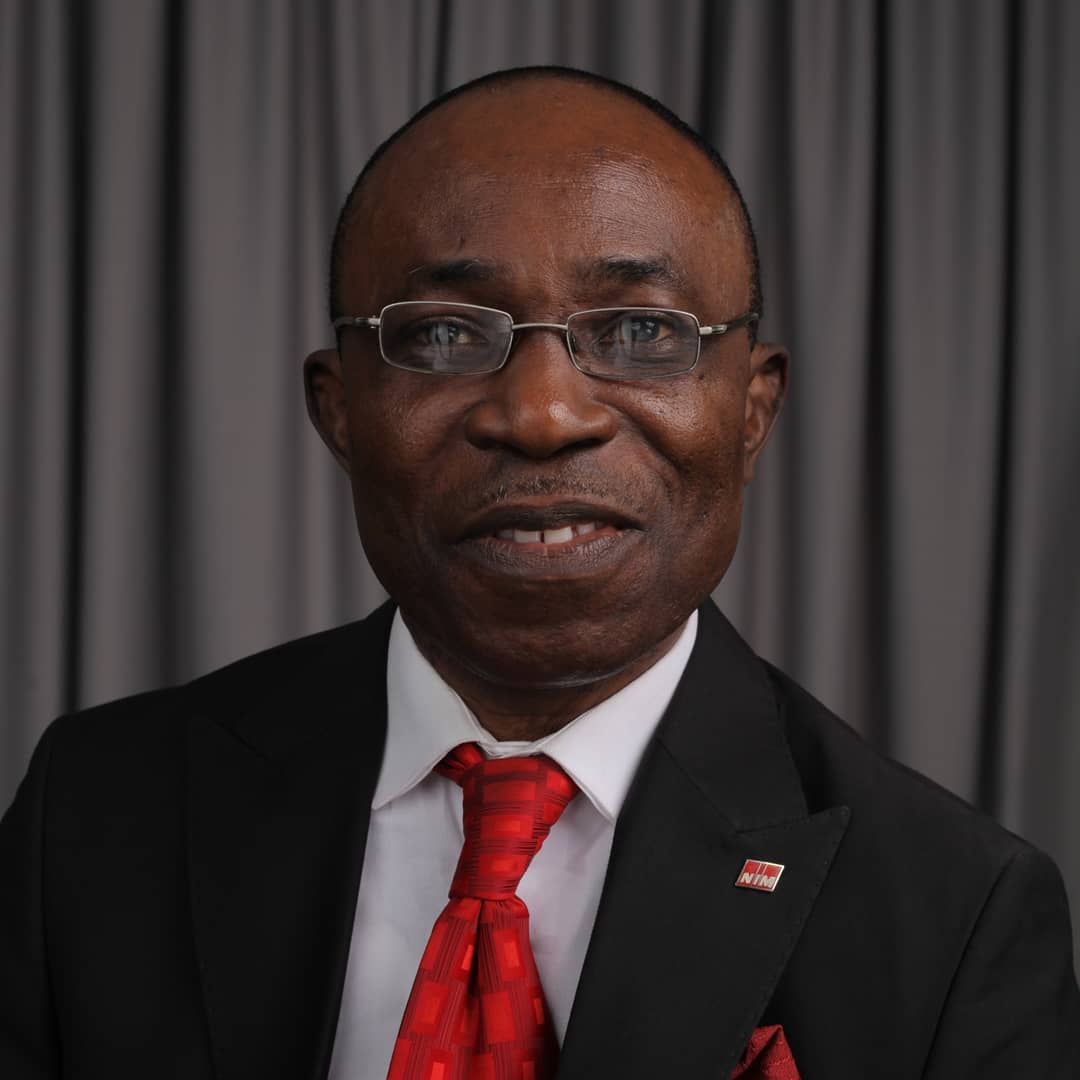
Revered and celebrated filmmaker Okey Ogunjiofor is unarguably the father of what is today globally known as Nollywood. As a pioneer producer in Nollywood, Ogunjiofor’s monster hit feature film, Living in Bondage, which he painstakingly and passionately produced in 1992, opened the floodgate of filmmaking in today’s Nollywood. In fact, that singular heroic and daring act of this multiple-award winning filmmaker completely changed the trajectory of filmmaking in Nigeria and indeed Africa, thus etching his name permanently in the pantheon of legendary filmmakers.
In this exclusive and explosive interview, cerebral and articulate Ogunjiofor, who is also an accomplished actor, writer and audio-visual consultant, spoke extensively on Nollywood, Living in Bondage, gains and pains of being a pioneer in the industry, and more. He also spoke passionately about his latest big budget film, Amina, which he revealed took a whole 25 years to be completed, why Netflix is interested in the project, among other germane issues.
Enjoy this bumper encounter with Ogunjiofor, the undisputed Father of Nollywood, famously known as Paulo.
As one of the pioneers and a leading filmmaker in Nollywood, we would like to know the projects you are working on currently?
Apart from the normal consultancy services as well as mentoring youths, I am currently working on the global release of Amina film. I am also planning the production of the subsequent parts of the Amina Trilogy.
Going down memory lane, we would also like to know what inspired your adventure into filmmaking?
You see, in the 60s & 70s, Nigeria had a very vibrant cinema industry operated by foreign businessmen. Then, foreign film production companies (Warner Brothers, Sunny Studios, Universal Studios, etc.) produced and distributed films around the globe, Nigeria inclusive. Then also, notable Nigerian filmmakers like Mr. Ifoghale Amata, Chief Eddie Ugboma, Chief Ola Balogun, Adeyemi Adelove Afolanyan, Mallam Brendan Shehu, Mr. Francis Oladele, Pa Hubert Ogunde, etc. were producing classic movies and had them distributed through the cinema chains built, managed, and administered by Americans, Europeans and other foreigners in Nigeria. This was before 1972/75, when the indigenization decree of General Olusegun Obasanjo took away ownership of most of these cinemas (and other foreign concerns) in Nigeria from the foreign filmmakers and drove them away.
So, Nigerians, who didn’t have the competence, didn’t have the resources, nor the administrative capacity to manage the business side of filmmaking then were saddled with the responsibility of manning and servicing these cinema houses across the nation. Then, for as long as the locals didn’t have the resources to make enough movies and the competence required to manage film business, it meant that a lacuna was created waiting for smart businessmen to fill the gap. It was also impossible to get the ‘Big Fives’ who were the major studios making films abroad to bring their products to distribute in Nigeria since they could not have control of their products to the final consumers, how would they get their monies back? So, they short-circuited Nigeria from the content supply chain and the gap became even wider.
It took quite a while for the few filmmakers I mentioned earlier who tried but couldn’t make enough movies to satisfy the hungry audiences across Nigeria. So, cinema-going culture began to nosedive and the cinemas themselves began to decay. Amidst so many challenges like infrastructural decay, epileptic power supply, and then insecurity to lives and properties in a country that has so much of downturns in its economy, it was a matter of time before the cinema-going culture finally died. Pirates cashed in on this lacuna.
Those few indigenous filmmakers mentioned above were making films on celluloid. They had very minimal competence in terms of finance; they would gather some local and foreign crew who worked with them in order to tell the stories. But then, celluloid filmmaking has always been cumbersome. If one wanted to make movies on celluloid, one needed to have a lot of money, have access to foreign exchange because most of the materials you would need were gotten from abroad. The film stock is bought from abroad; storage is not even easy here because you need some temperature range to store the film stocks. Then, when you finish production, you still need to travel outside to get the neck-cuts, matching done, during the development of the negatives… in the studio. And then you edit, print, package, run into reels – the reels that we then use at the cinemas. So, if one doesn’t have the technical competence and money for such long-term investment, one couldn’t even dabble into film production.
It was at that period that I left Television College, Jos, where I graduated in film and television productions in 1987 and headed straight to Lagos to find purpose and destiny for my life.
As the undisputed father of Nollywood, briefly share with us the story of how you produced the globally acclaimed Nollywood’s first feature film, Living in Bondage.
When we left school, because there were no platforms for us to practice our trade, it was like we had gone to school to waste our time. So, we needed to reinvent the modus operandi of the way things were done in the film sector in order for us to be relevant. It meant that we either reinvented ourselves and the structures available or we just die unemployed. Simply put, Nigerian cinema industry was at a crossroads and a “Messiah” was needed to find the new ways of doing the old things.
It was a period of employment embargo everywhere in Nigeria. Nigerian Television Authority that would have readily absorbed a few of us could not because government was going through a turbulent economic crisis. So, most of us who really wanted to make a living out of cinema decided there must be something we could do. And one of the things I thought to myself was to use an ordinary hand-held VHS camera to tell my story to the world. I would take cinema to the homes of people instead of taking people to the cinemas. In school we were taught that the story-telling quality of picture is the same, no matter the format.
Please keep in mind that no one was in doubt that the quality of the VHS camera I intended to use was inferior to cine cameras. No one was fooled; we knew the difference between the quality of the big gauge compared to VHS. The disparity is huge. But I just wanted to survive! And, I wasn’t going to be talking about quality when I needed money to feed myself. So, I said, if I could get a VHS camera, with about ₦150,000 budget, I could make a movie, a low-quality movie though, low budget movie, and put it out there in the homes of the teeming cinema audience hungry for the cinema experience. I wasn’t going to take the film to the cinemas that were nonexistent. All I planned to do was put the film in cassettes and take them to the homes of people. So, the model was, take cinema to the homes of people instead of taking people to the cinema. My business plan was also simple. Produce a film for N150K and sell each cassette at N300 only. This is of course excluding all other logistics and incidental costs.
Example A: Cost of production: N150,000 + N60,000 (cost of 1,000 VHS 3hrs cassettes @ N60 each), sold at N300 each = N300,000. Profit = N90,000.
Example B: Cost of production: N150,000 + N600,000 (cost of 10,000 VHS 3hrs cassettes @ N60 each), sold at N300 each = N3,000,000. Profit = N2,250,000.
Example C: Cost of production: N150,000 + N6,000,000 (cost of 100,000 VHS 3hrs cassettes @ N60 each), sold at N300 each = N30,000,000. Profit = N23,850,000.
So, with this idea, I hit the road searching for investors, but made no headway. I knocked on many doors; nobody was ready to buy into my idea because it had never been done before. I floated from job to job and finally took to the streets to hawk. I did that for four years – from 1988 to 1992, thinking I could raise N150,000 (less than $15,000 USD at that time) to make my film.
After four years of hawking on the streets of Lagos Nigeria to raise this fund, God finally smiled on me in 1992 when I got a referral from Mrs. Ruth Osu to Chief Kenneth Nnebue (an electronics merchant who imports empty VHS cassettes for sale at Oshodi market) who then agreed to invest in Living in Bondage when I pitched the idea and the business model to him. The partnership set to work, I produced the film while Chief Nnebue financed and marketed it. Within one month, it was a breakaway success. A new industry was born, later to be called Nollywood. Perhaps, because Chief Kenneth Nnebue sponsored the film, marketed the film and carried the promotional campaigns of the film in his (Nek Video Links) company’s name, it became so easy to associate him with the idea than the street boy who God used to make it all happen. But this has to change.
Still on Living in Bondage, did you envisage it was going to be a huge success and a reference point in filmmaking, while you were shooting it then?
No. I did not envisage that it was going to be a reference point in filmmaking while we were shooting the film, but I definitely knew it was going to be a huge success looking at the simple business plan I drew up (as mentioned above) and presented to my sponsor.
How does it feel waking up every morning and knowing you are the filmmaker that changed the trajectory of filmmaking in Nigeria with Living in Bondage?
It is humbling, yet, let me say that the story of the advent of Nollywood is not one I would particularly like to take credit alone for, although I appreciate that the credits be situated rightly where they belong. Yes, the ultimate change agent who always love to pioneer new moves for mankind through vessels on earth is God. He alone who inspired us deserves all the glory, especially also, everyone who teamed up with me, played a part no matter how small in that pioneering effort deserves a place in history. I cannot thank God enough for giving me this lofty place in history.
What were the major challenges you encountered then as the producer of Living in Bondage?
The first major challenge was funds. You know, the story of Living in Bondage is the story of every young man all over the world. It’s a global story. The period between when you were living with your parents schooling and they’re fending for you, and when you become a man, on your own and fending for yourself is the defining moment that every young man must pass through in life. That is the period when every young person is torn between left and right, when they’re out there looking for jobs, searching for their destinies and the good, the bad, and the ugly are jostling to make or derail you.
And so, here was I who left school, came to Lagos from Jos, with nobody to run to. My parents were not here, they’re poor teachers in faraway Imo State. I thank God I had an uncle to squat with while looking for my destiny and to find what I could do. I had been trained in school but I needed to find purpose for my life, find the niche-need in the larger society that I would serve in order to help mankind and myself. And then every door I knocked trying to make this movie was rebuffed, all doors closed, I didn’t have rich relations who could give me the money. I didn’t have any collateral to borrow money from banks and even if I had and wanted to borrow money from banks, they didn’t believe in filmmaking as it wasn’t a viable business back then as it is now.
So, what was I going to do? Steal? Join crime? At some point I contemplated pushing drugs, but I wasn’t brought up that way. I couldn’t bring myself to any of those vices because they were not part of the values my parents gave me. I learnt dignity of labor from my parents, so, I needed to work hard and that was why even as a graduate I ended up on the streets, hawking. Now, in the course of being on the streets I met a lot of people who wanted me to join them in one crime or the other, or join them in one cult or the other so that they could give me the resources I needed to become who I wanted to be. These challenges eventually became the simple story we told in living in bondage.
And so, for every man, it’s either you’ve passed through that stage in life, or you’re passing through it, or the film will become a lesson for you because you’re going to pass through it by-and-by. Again, when I met Chief Kenneth Nnebue to tell this story, it was not scripted properly like a script should be scripted. What I did was to have simple sequence outlines, scene by scene, of what would happen all through. Then I needed to gather competent cast and crew who could interpret the film. I needed to gather people who were fluent in Igbo language, they were very few. So I will teach them the scenarios, give idiomatic expressions and then block them to act the scenes out the way they should be. Then I needed a good director to call the shots since I would be producing and acting as well, so I reached out to the one who trained me in directing in school to work with me, his name is Chris Obi Rapu who, because he was working with NTA at that time couldn’t use his real name; he used a pseudo-name – Chuks Modi.
It was not until Circle of Doom my second film in 1993 that I began to write full scripts with dialogues. The dialogues we used in Living in Bondage were gotten spontaneously on the spot during rehearsals as we discussed the scenarios, and people brought in their own dimensions to the story. That’s how we rehearsed it over a period of time. That was why the relationships and the actions were so very apt that when you watch the film you would think there was a script… because it had been well-knit together under a series of rehearsals in order to build the plots.
Did Living in Bondage make you rich, financially?
No, unfortunately.
Learnt you and the executive producer of Living in Bondage, Kenneth Nnebue, fell out. What truly happened between you and him?
He reneged on the oral contract we had before going into the partnership. We didn’t have a written agreement because I was a novice, a hungry street boy, a visionary pregnant creative ready to do just about anything just to give birth to my baby. But I thank God that, although I was cheated, an industry was born and life goes on.
Aside filmmaking, what else do you do in Nollywood?
I am a film and television producer, an audio-visual consultant, an author of many books, I am the founder and president of The African Audio-Visual Awards (TAVA), youth mentor, event organizer, and preacher of the gospel around the world.
As a pioneer in Nollywood, what would you say are the major challenges and pains?
There is a combination of factors that have endeared Nollywood to the world lately, which is why they are taking notice of what we are doing. Nevertheless, at the beginning, our major obstacle was acceptance and recognition, everyone tried to kill Nollywood at its inception; no one gave it a chance globally. There was no government support and even the supposed distributors in the various markets became the pirates of the films they were distributing. Although digital filmmaking started in Nigeria then, nobody was there to take ownership and tell our story to the world. Older filmmakers criticized our industry and called it nonsense but later they joined the nonsense. Foreign groups derogatorily called us Nollywood – “Nothing near the Wood”. While some local journalists praised the feat, others took us to the cleaners rather comparing our experiment, especially quality-wise, with the more established Hollywood and Bollywood film industries. But here we are still today by the grace of God, and by the prolific nature of Nigerians who are “never-say-die” people, changing the narratives about Africa, rewriting the history and what you would call negative prejudices that the world has always had about Africa, above all creating massive employment that grows African economies.
Aside, Living in Bondage, which among your numerous films would you say is very dear to your heart and why?
Although all my films are dear to my heart, but I think Amina would readily come to mind here. The main reason would be that it promises to be a re-definition of Nollywood going forward, just as Living in Bondage was a re-definition of film practice in the past.
You see, after my pioneering efforts in Nollywood with Living in Bondage, Circle of Doom, Nneka the Pretty Serpent, Brotherhood of Darkness, and other hits, the whole world took notice of our industry. I felt that there was more we could do to deepen the acceptance of the phenomenon called Nollywood. I felt that we could start telling our indigenous stories to the world not only to entertain Nollywood’s growing global audience but to research and document the lives and times of our heroes and heroines past, in order to re-write the negative narratives against Africa in the global arena, and also create the impetus upon which Africa’s growing young population would stand and aspire for higher ideals.
Having seen all the odds against women around the globe, I decided to do a story on the life and times of Queen Amina of Zazzau, in order to draw affirmative actions towards the plight of women and the girl-child. Queen Amina was one of the most charismatic and alluring sovereign queens ever to rule on the African continent when it was not fashionable around the world.
So when the former First Lady of Nigeria, Mrs. Maryam Abacha returned from the Beijing Conference in China on women empowerment and gender equality, and her office advertised for programs to actualize the vision of the conference, on the 8th of August 1996, I wrote to the presidency of the Federal Republic of Nigeria through the Center for Women Development for partnership to produce a gender based book and film based on the life of Queen Amina. They loved the idea and promptly asked me to embark on research so as to produce the authentic story of Amina, but without giving me a dime.
I then reached out to Masoma Africa Foundation, a female gender-based NGO led by Mrs. Sylvia Bello and Mrs. Florence Adeyanju for assistance. They made contacts with America and got me some funding from the Kennedy Center, Washington, for the research. Overjoyed, I left my young wife and our first child who was just about 6 months old then and, in the company of Sola Ojewusi, my researcher, we traversed the length and breadth of the thirteen emirates of northern Nigeria in search of the authentic Queen Amina story. It was a journey filled with obstacles, frustrations, and many depressing moments.
On August 20th, 1998, exactly two years since we started the research, the presidency pulled out of the partnership because of a change in government, and wished us well. Undaunted, we continued, from Arewa House to university libraries, museums to professors of history, traditional historians, and emirs, we travelled to Zaria, Kaduna, Bauchi, Dass, Abuja, Suleja, Kano, Turunku, Jos, Taraba, Kogi, to Ilorin, etc., till we had enough information to produce the historical perspective of Amina in a book format. Kennedy Center Washington then flew in two of their topmost artistic directors into Nigeria to authenticate the story and obtain the stage rights of the project for their center.
Let me also mention here that at some point during the research, some well-meaning Nigerians like late Ambassador Segun Olusola, Gidado Idris (former SGF), Mr. Eric Teniola, Hajia Amina Sambo, (former president of National Council of Women Societies (NCWS), Late HRH. Eze Chris Nwosu (Ebube Dike of Amaebu), HRH. Eze Laz. Ezenwa (Obinkwo of Amankwo), and Chief. James Udenwoke gave us sundry contacts and helps.
Thus, left alone, but with the research compendium in my hands, my search for funds to make the film began. All the doors we approached or knocked closed before us until the 19th year in 2015 when Project Act Nollywwood, Ford Foundation, offered us grants, and Bank of Industry gave us a loan to begin this film project with other investors joining subsequently.
Armed with only the audacity of passion and determination, we went to Jos to re-create 15th century horse sweat-soaked battle grounds, majestic medieval palaces of mud and stone, dusty hovels of the desperately poor, the tense intrigues of age-old royal courts, while working with over 1000 northern artistes and 86 Southern crew members. A feature film made with collaborations that spanned three continents of Africa, Europe, and America during the production and post-production of over a 5-year period.
Today, 25 years after, my joy knows no bound as sub-Saharan Africa explodes into life, power, and sound in Amina, as Netflix takes this thrilling epic movie about the most charismatic warrior, sovereign, and queen in the history of Africa to the world. A celebration of the African girl-child and woman. A gripping tale, a fascinating narrative!
As a strong stakeholder, what would you say is the biggest obstacle facing Nollywood currently?
The greatest obstacle facing Nollywood currently is the mistake of benchmarking Nollywood products with foreign films especially Hollywood. The drive to conform with Hollywood standards is gradually eroding the Nollywood brand. There were reasons Nollywood products compelled the whole world to pay attention to our style of filmmaking. But gradually, owing to foreign investments, and the quest to be like Hollywood, we are beginning to lose those unique flavors that distinguished our products from all others. While we cannot argue that the Nollywood quality still leaves much to be desired, yet, we have carved out a niche for ourselves in the global film market space, a niche that if tweaked a little bit with a little more funding, and a little more investment in distribution structures, and a little more technical details, Nollywood brand of filmmaking will soon crystallize just like the India’s has, just like the China’s has, just like the America’s Hollywood film industry has, without losing authenticity.
What are the rare qualities a good filmmaker must possess?
A good filmmaker must possess four essential qualities (4G), if he must succeed:
1. God. He must acknowledge and recognize the place of God as the source of all things creative in the creative process. He must solely depend on God as the giver of insights and talents, not drugs or any other source. He must have faith in God, must be conscious not to abuse that source so he does not dry up.
2. Guts. He must have an intuitive capacity that tilts towards the prophetic. Must be clear in his thinking, decisive when he makes up his mind, believe in himself and trust his judgments regarding any project he is embarking upon. Since film is about communicating the cultural tones of a people via sights and sounds, he must be well read, well-traveled or have a broad world view to life issues to communicate effectively with his audience.
3. Grit. He must be a person of courage and resolve with great strength of character. He must have a never-say-die attitude to his craft, be very passionate, pains-taking and persevering enough to weather the storms till result comes.
4. Grace. After thorough planning, he must depend on God’s goodness to take care of those unforeseen things that may crop up from the beginning of the creative process till the exhibition, like timing, etc. He must be a very good manager of men and resources.
What makes a good film?
The word “good” in the context of artistic expression is very relative. And so, to that extent, there is no good film or bad film. It depends on the audience, because what is good to one may not be to another and vice versa.
Have you ever been harassed sexually by desperate actresses on set?
None that I can remember. The simple reason being that from inception I have always clearly communicated my three productions rules to my cast and crew: If you toast me, I fire you. If I toast you, I fire you. And if I catch or get a report of any two cast or crew becoming intimate on my set, I fire them without pay and re-shoot all the scenes they appeared.
Do you think the government has done enough to support Nollywood and its practitioners?
Government has not done enough, but I thank God that they have woken up with interventions like Project Act, Nollyfund from Bank of Industry, and sundry policies and schemes to grow the creative industry. I think that the future is very bright.
As a leading practitioner, what would you say is your biggest achievement in Nollywood?
None yet. The best of my years is ahead, and so are my biggest achievements – ahead.
In your opinion, are Nigerian entertainers well remunerated?
I think people get what they deserve. Remuneration is a relative term, always governed by value offered within a particular space and time. Giving the same value, in a different space and time may attract a different remuneration.
Any regrets as a leading voice cum stakeholder in Nollywood?
I have no regrets in life because all things (whether good or bad) work together for good, to those who love God and who are called according to God’s purpose in life.
What are the three major things a good filmmaker must look out for in any production?
1. The production value of the film. 2. The entertainment value of the film. 3. The impact value (how does the film affect or influence the society), and how would the film bring good returns to the investors.
Can you produce and direct a pornographic film?
No.
As a pioneer filmmaker, do you feel threatened by the emergence of new talents in Nollywood today?
As a matter of fact, the opposite is the case, I am thrilled. All my career I have been at the forefront of discovering and using new talents in almost all my productions. I have been at the forefront of youth mentorship and empowerment, always trailblazing and charting new courses that would give youths everywhere around the world the opportunities for self-expression. That’s what gave rise to Nollywood, TAVA, book publishing and other such initiatives.
Since inception, you have remained very relevant and constant in Nollywood. We would like to know the secret or secrets and also what stands you out as a pioneer filmmaker in Nollywood.
My staying power is God; it is no secret. He alone stands me out. I am not better than anybody except that God has chosen to glorify Himself in me. I am just a vessel in His hands.
We would also like you to tell us, all we need to know about your latest big budget film, Amina.
Concept: Since ancient civilization in Africa, women have ruled on the continent. From Queen Nefertiti of Egypt (1292 BC), Makeba, Queen of Sheba (960 BC) and Empress Candence of Ethiopia (323 BC). Later, we had Queen Amina of Zazzau (c. 1533 – 1633), Queen Anna Nzinga of Angola (c. 1583 – 1663) and Yaa Asentewa of Ashanti Kingdom of Ghana (c.1830-1921), Queen Sarraounia Mangou of Niger (19th Century), Ranavalona of Madagascar, Beatrice of the Congo, to name a few, etc. Despite the exploits of these great women in Africa, inequality, discrimination against women’s rights and other gender-based prejudices still persist. Not only in Africa, but the world over. Amina film raises an important question on why there are not many female leaders in the world today when history is full of women who have excelled as leaders. This is not just in the political arena but in business, the arts, and sports.
Theme: Amina film is a locally themed, globally relevant narrative. United Nations’ present focus is on women empowerment and Goal 3 of the Millennium Development Goals (MDGs) makes a very strong case also for the empowerment of the girl child and women around the world. Therefore Videosonic has chosen this feature film as a medium to drive this message of change to make our nation and the world a more equal place, to give all humans, female or male, poor or rich, the opportunity to rise to national and global leadership.
Authenticity: The authenticity of Amina story was verified through intensive research, which spanned a period of 25 years in addition to authentic exotic set, costume, and props designs created and built for the purpose of its thematic actualization.
Amina was executed using all the benefits of high-definition video origination equipment (ALEXA), up-to-date cinematographic support devices and computerized digital edit, including motion graphics and 5.1 surround sound. In addition, a trained team of audio-visual professionals responsible for the entire film is composed of a mix of experienced professionals and quite visionary young people with an eye toward constant innovation. Employing simple but ingenious low–cost approaches, the film will effectively achieve the level of awe–inspiring global pictures and universal sound quality only seen in foreign theatres.
Why did it take time?
An adage says, “Whatever is worth doing at all is worth doing well.” First and foremost, getting authentic Amina story that is acceptable to all was very difficult because there were many versions coupled with the fact that there was no single compendium containing Amina story.
Preparing the place to shoot this epic movie (location, and we chose Jos for its beautiful filmic topography) took time; then recreating the ancient palaces and cities of Zazzau. How do we get the costumes and props of 15th/16th century? So, I went to the North with 86 crewmembers, and we recruited over 1000 Northern artists; camped them for three months, trained them on how to ride horses, then, trained them on how to use the swords to fight on horse backs, before we went into the shoot proper. Then we built ancient buildings of mud and stones in that place for this shoot because there was no place we could find a semblance of Amina’s palace in those days that wouldn’t have the trappings of modernity. So, we needed top set, props, and costume designers to re-create. And, these things cost money but in the long run they were all worth the pains.
So expectedly, any box office hit able to hold its own with the competition globally requires time and money. Amina is a film that will compete favorably with movies from all over the world and take the Nigerian film industry to a new level so there was no need to rush it. Specifically, we took time on the edited film with our partner studios in Germany, Canada, and United States for equipment, quality visual effects, picture grading, sound design (Foley), music score, etc. These were necessary to achieve the kind of film that would not only thrill audiences around the world, make Nigeria and the investors proud, but a film that would attract international appeal and distribution, thereby generating enough revenues to repay our loans, encourage more investors to look favorably at Nollywood because of the profit margin.
What plans do you have for Amina film?
Currently, Amina will be enjoying a global release as a Netflix original film on the 4th of November 2021. The primary reason for every creative enterprise is entertainment but apart from this, there are other plans for embarking on Queen Amina film.
As the “Father of Nollywood” and in keeping with our vision which is to constantly chart a new course for others to follow, especially regarding the movement towards the investors’ market, we needed to show what is possible so that producers and investors can have a template upon which to base their calculations and decisions. This movie, which is a celebration of our historical heroine, is a cut above anything that has come out of Nigeria since the inception of Nollywood. We hope this film will once again change the landscape of film in Africa, like Living in Bondage did in 1992, and then usher Nollywood into her final frontier which I call “the investors’ market”.
Again, this film will bridge the gap between Nollywood and Kannywood. As we all know, there is a dichotomy between the north and the south of Nigeria in the creative space, while the northern filmmakers call themselves (Kannywood), the southern filmmakers refer to themselves as Nollywood. What this dichotomy means is that film products from either divide could hardly penetrate the other side. We needed to build a bridge, a unifying bridge across that divide that would bring Nollywood and Kannywood together to learn from each other when they collaborate on a common project that tells one single story that subsequently lifts the Nigerian film industry to the global arena, so that the whole world will see, and the northern people and the southern people will as well see that together we can actually be unconquerable when we eschew perceived differences and prejudices.
So as a trailblazer, my choice to do Amina, a Northern story, was deliberate. Nollywood as a brand is going through defining moments once again and I always try to find new ways to do the old things. It gives me great joy when I attempt the things that others find so difficult, so that others can have something to fall back on when we finally crack the “whys” and “hows” of doing those difficult things. So in essence, we just decided to create a partnership that would network the North and the South together so that the market can get bigger. What we have now is just a small Nollywood and a small Kannywood that could be bigger when we begin to collaborate to tell cross-cultural stories and thereby expanding the creative industry ecosystem for all.
Briefly tell us about the man behind the very famous name, Okey Ogunjiofor.
Okechukwu (Okey) Polycarp Ogunjiofor, popularly known as Paulo. Okey Ogunjiofor is a multiple award-winning filmmaker, actor, writer, and publisher. I am the pioneer producer of the Nigerian film industry, the global African brand known as Nollywood. I am a National Peace and Unity Ambassador, with great passion for youth empowerment.
I was born in Amankwo Ebenator, Orsu Local Government Area, Imo State of Nigeria. I am a devout Christian and happily married to Mrs. Gloria E. Ogunjiofor, an actress, model, and fashion designer. We are blessed with four children, three males and one female. My hobbies include reading, writing, preaching Christ, and mentoring the youths. I speak Igbo and English fluently.
My personal objective is to always trail-blaze uncharted waters in order to create opportunities for others to follow. I am passionate in my beliefs, dogged in my pursuits, disciplined and painstaking enough to wait for desired results. A well-trained, experienced and exposed practitioner who is always looking for the new ways to do the old things. I have good track record in the entertainment industry and well respected for integrity and knack for professionalism. I travel frequently discussing Nollywood as a brand of filmmaking around the world.
An alumnus of UCLA (School of Theatre, Film, and Television Studies, University of California, Los Angeles), obtaining international professional certificate in film and television production. A recipient of Google Tools for Journalists Certification. I hold a United States of America Documentary Master Class certificate as well as Bachelor of Science (B.Sc.) in Government and Public Administration, from Imo State University. I also trained at the prestigious Television College, Jos, in film and television production; I did my Industrial Training at Imo Broadcasting Corporations, Owerri; and graduated with an OND certificate, participated actively in the production of Soweto––The BBC/NTA 35mm celluloid film on apartheid South Africa (1986) and Mr. Johnson – the James Joyce’s classic (1987).
I obtained West African School Certificate (WAEC) at Ihitenansa Secondary School in (1982) and Community Secondary School Awo-Idemili in (1983). Due to my organized nature of doing things, discipline, and accountability, I held three different prefect positions simultaneously in secondary school (Laboratory Prefect, Power Prefect, and Furniture Prefect) between (1980-82).
My outstanding performance in Television College Jos, made the then Director General, NTA to recommended me to Chief Power Mike Okpala, the renowned world heavy weight wrestling champion, for employment. I came to Lagos in (1987) and got a job as the General Manager of Nigerian Independent Television Studios owned by Chief Okpala and we travelled extensively producing sports (wrestling matches). But because of an early retirement by Chief Mike Okpala, I and my colleagues soon found ourselves in the job market again.
It was a period of government embargo on employment in the audio-visual sector, a period that was characterized by a steady decline in the cinema-going culture due to infrastructural decay and insecurity to lives and properties. Determined to make a mark in the film industry having discovered a lacuna, I decided to take cinema to the homes of people instead of taking people to the theatres. The idea to pioneer the home-video culture in Nigeria was born.
Floating from one menial job to the other I ended up a street hawker for four years on the streets of Lagos in search of funds to enable me pioneer the alternative format for filmmaking through the home video culture. God smiled on me in (1992) when I got a referral from Mrs. Ruth Osu–Nana of the Checkmate fame to see Chief Kenneth Nnebue, boss of Nek Video Links. Our meeting and partnership heralded this global phenomenon known today as Nollywood, with my creative producing and NEK’s sponsorship of the pioneering film, Living in Bondage, released to the market on September 12, 1992.
I founded Videosonic Studios Ltd in (1993), and since then have created, written and produced, and directed so many exceptional contents and have remained a force in deciding the direction of an industry that has given Africa a voice, employment to the teeming masses of unemployed youths, and Nigeria Nollywood a position as the second filmmaking industry in the world. By this singular move, we gave Nollywood the platform to colonize the entire African continent with our cultures and images, rebranding Nigeria through re-writing the negative narratives against Nigeria and Africa and indeed her peoples.
I have also consulted for the presidency of the Federal Republic of Nigeria, through the Centre for Women Development (1996), and the Kennedy Centre, Washington, USA (2000) on gender-based research and programs for the empowerment of women and the girl child.
My keen interest to continue massive job creation for Nigerian youths through Nollywood gave me the impetus to research the life and times of the legendary Queen Amina of Zazzau for over 20 years (1995-2015). It was a project meant to build bridges between the creative divide of the North and the South and at the same time liberate the girl child and women.
Finally, while producing this epoch-making movie in Jos in 2015, we were able to expand the entire ecosystem of the entertainment industry in Nigeria, especially in the North, via a synergy where, for the first time, over four hundred and fifty (450) northern (Kannywood) actors and eighty-six (86) southern (Nollywood) professionals teamed up to tell a northern story with global pictures and universal sounds to document our common heritage through film.
Among my works on film and television include Living in Bondage (1992), Circle of Doom (1993), Nneka the Pretty Serpent (1995), Brotherhood of Darkness (1996), When Flowers Turn Black (1997); property manager for A Barbers Wisdom (An M-NET new directions’ 35mm film) (1999); consultant to MASOMA African Foundation for Kennedy Centre, Washington, USA, on Queen Amina project (2000); Area C comedy drama series about the Nigerian Police Force for NTA HQ (2000). Between (2001-2007) I directed and produced Rough Edges soap opera series on 21 national television stations, Cyberia soap opera series on 18 stations and pay cable television (2007), Hope Avenue sitcom series (2008-11), and Travel Access Club (TAC) marketing infomercial (2010).
In my drive to mid-wife Nollywood productions to global standards, I became the founder and president of The African Audio-Visual Awards (TAVA), an annual event meant to celebrate and reward outstanding African youths who excel in film, television, music video, and advertising commercials, thereby creating a common benchmark for quality in our productions since 2009 till date.
I produced and directed The Chattered Institute of Bankers of Nigeria (CIBN) 50 Years Anniversary documentary (2013). I was also the director, Global Live Broadcast of World Economic Forum (WEF) in Africa, Abuja (2014), with Videosonic crew, producer/executive producer of Queen Amina feature film for the empowerment of the girl child and women (2015-2019).
I hold a Life Time Achievement Award from Lagos International Film Festival (2007), Niteshift Special Recognition Award at The Coliseum (2nd Annual Nollywood Nite 2007), Nollywood Outstanding Personality Award by The Association of Movie Journalists (2008), Jury Chairman, Lagos International Film Festival (LIFF) (2008), Best of Best (BOB) TV Award for pioneering Nollywood and contributions to the growth of television industry (2009), Inducted Member of Nigeria Movie Makers Hall of Fame as an Actor, Producer and Director (2009).
Due to my pedigree in Nollywood’s sundry youth interventions, I was invited to be one of the resource persons to visiting German Youths in the “Go Africa Go German,” a German-African Scholarship Exchange Program, a joint initiative of the Federal President of Germany and the Federal Agency for Civic Education (2010). With all humility, my name is quoted among the Achievers Who’s Who in Nigeria (pg. 642, 2010). I am a member of Electronic Media Content Owners Association of Nigeria (EMCOAN), and have been returned twice unopposed as the national treasurer since 2011, for transparency and integrity. I received Nollywood at 20 E–Golden Awards in Germany as the Father of Nollywood (2012). I am youth mentor, Nigerian Youth Summer Carnival (Youth Against Violence and Addiction), Nigerian community, Cork, Ireland (2012), among others.
First published in DAYLIGHT, October 2021.
Culled from Azuh Amatus’ best selling books, FAMOUS FACES…
