



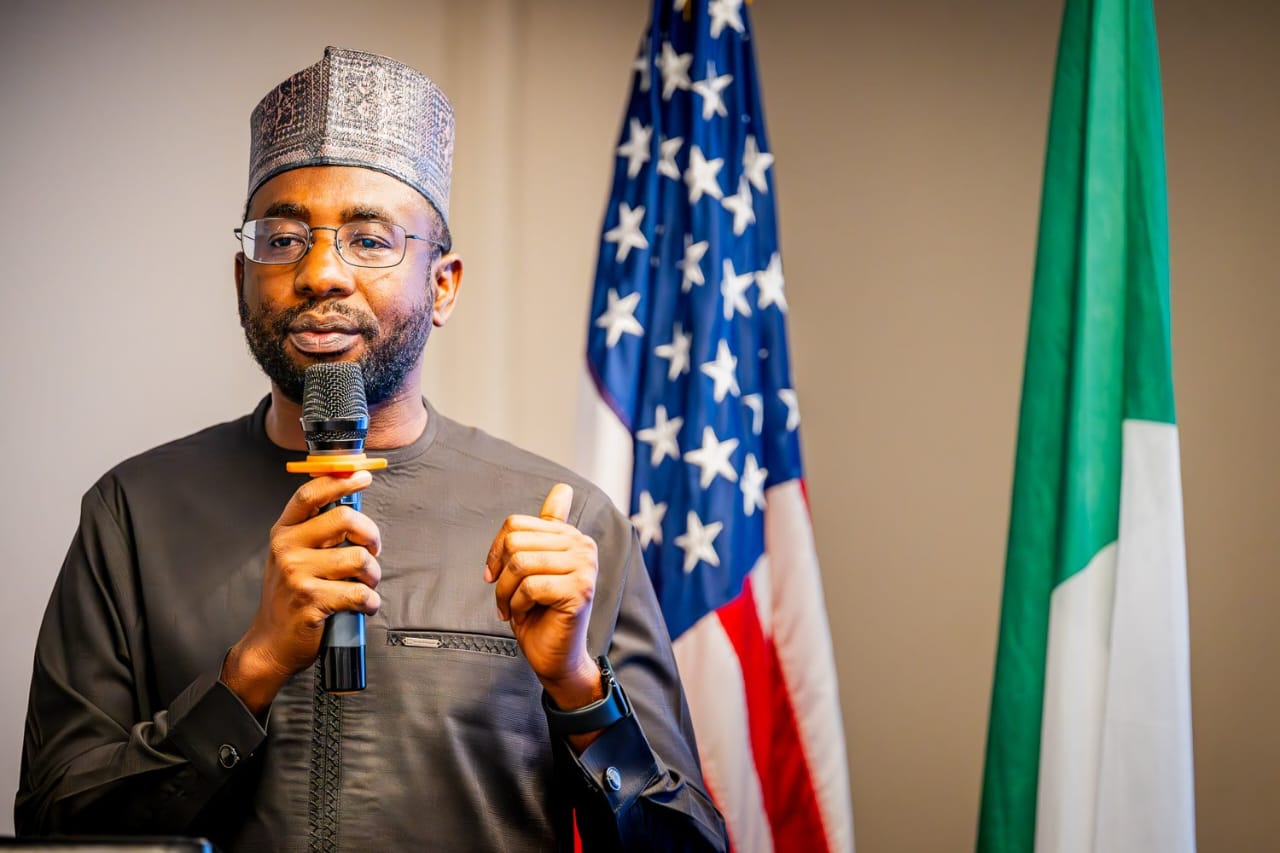
The Director General of the National Information Technology Development Agency (NITDA), Kashifu Inuwa Abdullahi, has reaffirmed Nigeria’s commitment to strengthening collaboration with the United States in building a secure, trusted, and resilient digital ecosystem, with a particular focus on data privacy, artificial intelligence, cybersecurity, and capacity building.
While delivering his speech, at the Nigeria Data Privacy Capacity Building Workshop organized by the United States Department of State, in collaboration with the Nigerian Mission and relevant stakeholders in the digital ecosystem, he stated.
Inuwa, expressed his excitement and described the workshop as a strong revalidation of the long-standing partnership between Nigeria and the United States in advancing the country’s technical and digital systems. The collaboration is not a new initiative but part of a growing and deliberate effort by both countries to jointly address emerging digital challenges and opportunities.
In April 2024, Inuwa, recalled that Nigeria and the United States, through the U.S.–Nigeria Binational Commission, agreed to work together on key areas including data privacy, artificial intelligence, cybersecurity, capacity building, and other aspects of digital development. That same year witnessed a successful hosting of an Artificial Intelligence Conference, co-hosted by the Nigerian Government and the U.S. Mission in Nigeria, as well as Nigeria’s participation in engagements with U.S. cybersecurity companies to explore partnerships aimed at strengthening Nigeria’s technical ecosystem, he noted.
NITDA’s emphasis on data privacy, AI, cybersecurity, and policy is anchored on one central objective: building trust in the digital ecosystem, adding that trust is a critical enabler of digital transformation, as its absence slows down innovation and increases costs, while its presence accelerates progress and reduces barriers to growth.
Building a prosperous digital economy requires deliberate efforts to safeguard data privacy, strengthen security frameworks, and deploy AI responsibly. Artificial intelligence relies on data, data demands privacy, and privacy can only be guaranteed through strong security, making it impossible to address these issues in isolation, he noted.
Inuwa described the workshop as the beginning of broader engagements and deeper collaboration in other strategic areas, particularly as Nigeria continues to position itself as a key player in the global digital economy. With the participation of the U.S. Mission in Nigeria’s National Cybersecurity Conference last year, plans are underway to expand the conference into an international cybersecurity platform this year.
Inuwa reassured partners and stakeholders of NITDA’s commitment to building the right policies and enabling environment for innovation to thrive. Nigeria, alongside Africa, represents the next frontier of the digital economy, driven by a young, digital-native population and a large, expanding market. The international conference will provide an opportunity for U.S. cybersecurity companies to showcase their technologies, explore partnerships with Nigerian firms developing local cyber solutions, and jointly strengthen Nigeria’s cybersecurity ecosystem.
He said that while many public and private sector organisations in Nigeria rely on U.S. technologies to build their digital systems, the country also possesses significant local talent capable of developing homegrown solutions to address national and regional challenges. He added that NITDA remains committed to working with international partners to build local capacity and promote Nigeria’s digital self-determination.
He appreciated the U.S. Department of State and the U.S. Mission in Nigeria for their continued partnership and support, expressing optimism that the collaboration will be further strengthened to explore new areas of cooperation, particularly in cybersecurity and artificial intelligence, for the mutual benefit of both countries.
Inuwa, emphasized that the only way to fully harness the opportunities of the ongoing AI revolution is by safeguarding privacy, establishing sound policies, and laying a strong digital foundation capable of supporting rapid technological advancement. Digital technology is no longer optional, as it represents the future of economic growth and development, and no nation can afford to be left behind.
