



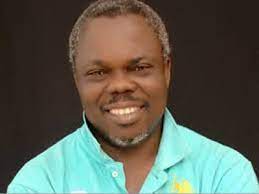
Opa Williams
Pioneer filmmaker, comedy merchant extraordinaire and entertainment guru, Opa Williams, in this hearty chat talks passionately about Nite of a Thousand Laughs, filmmaking, and why he is investing hugely and heavily in the Nigerian entertainment industry.
Enjoy the encounter!
Looking back, how do you feel about the success of Nite of a Thousand Laughs?
Without trying to sound boastful, there won’t be comedy today without Nite Of a Thousand Laughs. Before we came on the scene, what you have on ground was just comedy programmes like Papy Luwe, Awada Kerikeri. Today, stand-up comedy as a genre has become the most popular form of comedy. I am proud to be one of the forebears of this area of entertainment in Nigeria.
You nearly gave up at some point, how did you cope with the challenges?
Yes at some point, I nearly gave up but I didn’t. Some of the inspiring moments that kept me going were encouragements by people like Elder Steve Rhodes of blessed memory. Baba would drive down to my office and buy his ticket for the show before anybody else. If at that point I had given up, what would I tell people like that? There were also couples who met during my show. For instance, I remember meeting this woman who told me she met her husband at my show and have been attending with their kids. When people believe in what one is doing, that is enough motivation to keep one going. I am humbled when I hear testimonies such as these.
You are not a Yoruba man, but recently veered into the production of Yoruba language soap on TV, what inspired the move?
What I do regularly as a creative entrepreneur is to look for the need of people and I fill it, simple. I observed that even a lot of non-Yoruba speaking movie lovers especially Igbos like watching Yoruba movies, of course those that are translated. I also realized that we don’t have Yoruba soap on air. So what I did was to fill that gap. Somebody told me e no go sell but out of the four soaps I have running at the moment, Abelejayan has generated more feedbacks than any other.
You come across as someone who is very much in touch with the latest trend in news and I can see books strewn all over your office. What role has information played in your business as a showbiz mogul?
The scripture said my people perish for lack of knowledge. Two things can kill a man; God and information. For me, this goes beyond just certificates, you must learn, you must read and you must be a voracious reader. It is the use and the knowledge of information that makes a man.
After 16 solid years in the comedy industry, what are the new innovations you want to inject into Nite of a Thousand Laughs, taking into cognizance the emergence of new comedy/music shows like Basketmouth Uncensored and AY Live?
For the past 16 years, we have made a brand out of Nite of a Thousand Laughs and we have been able to conquer the Nigerian market, so to speak. We have never looked back. At this stage, we want to go international and become a multinational brand. We have been to London and Ireland once or twice. I am not a comedian but I own a comedy entertainment platform. Having been in Nigeria, we don’t want to continue to do the usual rounds by going back and forth to foreign countries. For instance, Idols West Africa is a franchise of American Idols and the difference between both is that the one we see has been adapted to suit local audience. This is the time for us to start. We are doing a whole lot of innovations on the show, which are already manifesting. I do not want to divulge much, because they are all part of our business secrets.
You recently stormed Kenya and other African countries with Nite of a Thousand Laughs. What were the plans you had on ground that helped the shows to be successful?
We had a good plan because we stormed Nairobi, the capital of Kenya this year, for a massive show and we collaborated with lots of big brands in East Africa. For the first few years, we hope to operate 70/30 content with Nigeria providing much of the contents including the performers. In the coming editions, the proportion of talents will change such that we’ll have a 60/40 and 50/50 and so on. In the future, we are looking at a time where the show will be a proudly Nigerian export to Africa and the rest of the world. As the show grows, so do the entertainers and so do our royalty as the copyright owner.
This was no doubt a huge project that cannot be organized alone. Who were your partners for these shows?
Taking a cue from the conglomerates, before making an incursion into an unknown terrain they usually work with somebody on the ground with a vast knowledge of the environment. We are in partnership with the Radio Africa Group, a media group with a network of radio stations, TV and newspaper houses spread across East African countries such as Uganda, Tanzania, Gambia, Kenya and many others. They have bought into the brand. In my recent trip to a couple of countries in that region, one of the biggest revelations is that a lot of Nigerian comedians are well known in that region like: BasketMouth, I Go Dye, Klint D’ Drunk, Gordons among others. I went to a night club in Kenya and for about 45 minutes it was Nigerian Hip hop songs non-stop.
As one of the leading voices in the industry, what is your take on the much hyped $200 million fund for the entertainment industry from President Goodluck Jonathan?
I am neither in support nor against the fund because I am educated. First of all, the money has been there all these years provided by the World Bank for the purpose of job creation including the promotion of small and medium scale enterprises. However, our industry happens to be the second largest employer of labour in this country. I would like to add that this money is not for the entertainment industry but a fund for job creation.
But Mr. President clearly stated that the money was meant for the entertainment industry at the Silverbird 30th anniversary in 2010.
Well. I wouldn’t know why Mr. President had chosen an electioneering period to make this pronouncement. Nobody has told us when or if the money was released by the apex global financial institution. If the money arrived last year, why didn’t somebody choose that period to make the announcement? The question is did the World Bank coincidentally release the money during the Silverbird event and if the money had been released by the bank, then where is the money at the moment? If the money is indeed available, let the Government begin the process of disbursing it to the right quarters rather than make it the subject of media frenzy.
First published, November 2011.
