



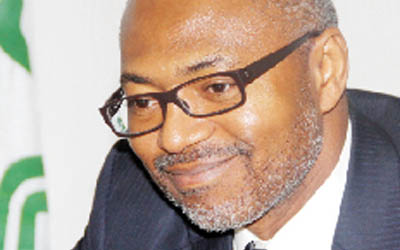
Mr. Emeka Mba, the amiable, cerebral, and articulate Director General of the National Film and Video Censors Board (NFVCB), in this interview, spoke on a wide range of issues, especially the controversial framework distribution policy, his vision for Nollywood, challenges at the board, how he intends moving the motion picture industry forward among other germane issues.
Enjoy the interaction!
Aside censorship, what else does NFVCB do for Nollywood?
The NFVCB is an agency under the ministry of Information and Communications. Essentially, the board was set up by an act in 1993, as a regulatory agency for the film and video industry in Nigeria. As our name implies, we do the censorship of films, classification of films as well as the licensing of cinemas, retailers, exhibitors and the rest of them. We are about 15 years old. Since I joined the board, chief among our initiatives, is the “Nigeria In The Movies Project”; it actually seeks to promote a lot more responsibility in film making in Nigeria by our filmmakers. We believe that the idea of censorship in a digital age is an uphill task. And without the active participation of filmmakers and the citizenry, it will be impossible for us to progress.
It’s also aimed at creating a channel of empowerment for people within the industry and also help structure it; also to help lend our own efforts to the fight against piracy and generally promote the cause of good society through what we do at the Censors Board. We have also launched the media literacy programme. We have also launched the Nollywood Interactive with NACA, to fight against HIV/AIDS. We want to promote ideals that are beneficial to the industry, using our film industry. We believe that the media, which the film industry is a central part of, can help reshape and redefine and also help change our attitude as a people. We need the media to become an active player in the growth of our nation. We will cherish the relationship that we will begin to build from this day with our partners.
What is your take on states censors boards?
Under the current constitution that we operate, yes, censorship is on the concurrent list; this means that both states and federal can operate. It’s an issue that is quite worrisome to the industry. At the moment, there are issues going on in Kano State. Same constitution also states that states should remain in an abeyance, where there is a clash with the federal. We are seeking to get a judicial interpretation from the Office of the Attorney General and Minister of Justice. The national assembly has also waded in. We believe we are not a federal film agency, but a national one. We also have zonal offices within the six-geo political zones. We have also set up zonal consultative groups, for stakeholders within that group to participate in our activities. Our offices are in Kano, Onitsha, Lagos, Port Harcourt, Bauchi, and Jos, and of course, Abuja. Hopefully, with the review of the constitution that we are looking forward to, we will be able to put to rest and clarify the mode of operation. It’s a fight for all of us in the media and creative industry.
Is it right to have censorship in a democracy?
We are preaching the idea of responsibility now. If one is trained as a filmmaker and has the higher sense of responsibility, it’s much more likely that he will do the correct films. Very soon our role would be that of classification and providing the information for people to make the decisions. There is no US film today that you will not see their flag. That’s not censorship, but responsibility and professionalism. Mind you, children now have more access to the Internet and there is porno and others. Agreed, the word censorship is almost obnoxious, there has to be regulation. The better word should be regulation.
And what is Censors Board doing about pornography in Nollywood?
I must confess that it is part of our responsibilities to deal with the issue of pornography. It is also an issue for the wider society to tackle. Over the last three years, we have actually had what we call the national anti- pornography task force. We have also taken a much more strategic stands in dealing with major producers and suppliers of pornographic materials. Our surveillance teams are currently working. We will soon begin an anti pornography campaign. We are also soliciting the help of the media in this direction. It is also the reason we actively insisted that everyone, who is retailing films in Nigeria, must be covered, we must know who you are, where you operate and get your supply from. The law or act on this issue is clear. We are currently creating the database of these operators. This year alone, we have arrested over 30 persons and some of them are still standing trials. It’s a big challenge and all of us at the board will continue to work towards ridding the society of this menace.
How do you intend to resolve the protracted issues between moviemakers and marketers?
Let me say this clearly, we published a list about our new distributors and we have over 20, 000 of them nationally. The fees were drastically reduced for existing marketers, just buy a form for N2, 500 and the license fee for a year is N40, 000, which we all agreed upon, nothing more. Where some of them got the figure of N50 million, we don’t know, that is not true. This industry has been factionalized along ethnic lines. Lack of structure can never guarantee growth in any industry. We need to have the fundamentals. No film industry globally has survived without a structure. We are happy that the number of those who are complying is greater than those who have not .The doors are still open and the forms are available in all over offices.
Why did some marketers refused to register?
It is not popular among marketers who have been milking the system. And they also will lose out now that we are democratizing the system. Several marketers have registered, O.J. and Ulzee, are among them. For championing this noble cause, I have received several death threat messages.
We would like your views on the raging Big Brother’s controversy?
Every agency of the government has its own turf. The Big Brother show is under the National Broadcasting Commission, (NBC). If the content were to come in the form of a tape, VCD, or package, it would then be my area. It’s an interesting show and NBC is on top of it; they have set conditions for the organizers.
What is the net worth of Nollywood?
It is difficult to speak on any form of accuracy on the net worth of the industry. I can give what we considered to be the estimates; based on what Leke Alder did, using the economic stimulus index. Probably a statistical analysis of between 250 and 300 million dollars on an annual basis. We are currently doing the baseline survey of the Nigerian entertainment and creative industries in collaboration with HITV. It will help us make an informed investment decision. We have told all marketers to get a lawyer and accountant for the benefit of their own businesses, but they are kicking against it. We have also told them to get insurance cover for their creative works, so that it can be valued. This can even help them access loans from the banks. We are also not fighting anybody. We believe in lifting people up. We are not out to chase anybody out. This form is online and accessible anywhere, because the train is moving very fast.
In what ways can we revive the cinema culture in Nigeria?
All of these things point to the perception of a very disorganized film industry. People are afraid to make investment decisions. They are scared of making elevated investments. They have to be lots of confidence in the environment. It costs a lot making celluloid films and it also requires a lot. We are recording and not yet filming in the industry. It is what I call point and shoot.
What exactly do you look out for while censoring a movie?
We look at essentially five thematic materials whenever a film is submitted for censorship, in the areas of context and impact. We censor sex, nudity, violence, drugs, and imitable techniques. But the key is context and how the movies impact on the audience. The officers are trained to follow these criteria. And a filmmaker that is not satisfied with our decisions can appeal. Parts of our responsibility are training and empowerment, thus bridging the ignorance gap. We need to have more informed and properly trained filmmakers; if we must maintain our position in the global film hierarchy, otherwise we will be a laughing stock. For example, rituals in movies have dropped. We are also organizing script workshops with professionals being invited.
And what is the way forward for the industry?
I will speak in terms of my expectations, in the sense that we look forward to a better-structured industry within the next year. We would also begin to see better movies, a lot more investments in the industry. Even the people currently agitating, I’m expecting that they would soon realize the benefits of what they are fighting. Remember when Soludo started the banking reforms, those who kicked against it are reaping beautifully today and also celebrating and giving him awards everywhere.
NB: Mba was a former director general of National Broadcasting Commission (NBC)
First published, August 2008.
